KyushuFeaturedPublic
Fukuoka PARCO
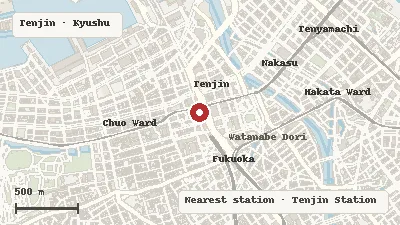
福岡PARCOFukuoka PARCO is a Tenjin shopping complex with fashion, food and changing cultural retail. PARCO has announced that this branch is scheduled to close at the end of February 2027.


Kyushu
Build a Kyushu route from curated places, then use each guide’s practical context to decide what belongs in the itinerary.
Fukuoka PARCO is a Tenjin shopping complex with fashion, food and changing cultural retail. PARCO has announced that this branch is scheduled to close at the end of February 2027.
Browse Canal City Hakata’s curved shopping terraces, pause beside the water and build a meal or fountain performance into the visit.
Visit Dazaifu Tenmangū for its wooded shrine grounds, plum-tree traditions and enduring connection with learning, poetry and the arts.
See Kumamoto's restored towers and the ongoing work of rebuilding a much larger castle landscape.
Wander canals and flower gardens, then choose the rides, shows or evening lights that suit your visit.
Follow Fukuoka's coastline and city streets from the tower above Momochi's waterfront.
Pause beside Lake Kinrin for reflections, a short waterside walk and, in suitable conditions, rising mist.
See Takachiho's rock walls and Manai Falls from the walking route, or arrange a boat trip when river conditions allow.
Meet Fukuoka's RX-93ff ν Gundam at full scale outside LaLaport.
Find the Hakata shrine at the center of Yamakasa's float traditions.
See Sakurajima framed by the Shimadzu garden, then trace Satsuma's industrial story.
Enter Kirishima Jingū's wooded precinct beneath the volcanic mountains.
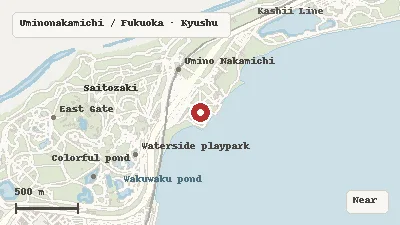
Marine World Uminonakamichi introduces the waters around Kyushu through large aquarium tanks and exhibits on regional marine environments. Its position on Fukuoka's Uminonakamichi peninsula gives the subject a coastal setting, with Hakata Bay beside the complex. Follow the habitat displays at your own pace and check the day's presentation schedule if shows are a priority.
Walk Mojiko's historic port streets and look across the Kanmon Strait.
Try ICHIRAN's tonkotsu ramen at its Nakasu head store in a solo booth.
See the blue steam of Umi Jigoku on Beppu's geothermal circuit.
A reconstructed keep and old moat trace Kokura's castle-town history.
See Nagasaki Harbor from the foreign-settlement houses of Glover Garden.
Nagasaki’s signature hilltop viewpoint, with a 360-degree panorama across the harbor in Inasayama.
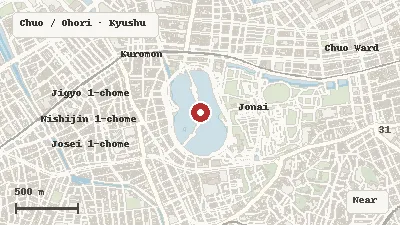
Ohori Park's broad pond carries part of Fukuoka Castle's former defensive landscape into a modern city park. Bridges link islands across the water, offering an alternative to following the shoreline paths. A walk can focus entirely on the pond or extend to the separately operated Japanese Garden and Fukuoka Art Museum along its edge.
Step into Yufuin Floral Village's storybook shops and themed lanes.
Look across Aso's caldera and central peaks from Daikanbō's rim.
See iron-red Chinoike Jigoku on Beppu's geothermal route.
See varied steaming pools at Beppu's Kamado Jigoku.
Learn from Nagasaki's bombing history and survivors' testimony.
See Nagasaki's stone Megane Bridge and its eyeglass reflection.
Read the letters and personal histories preserved at Chiran's peace museum.
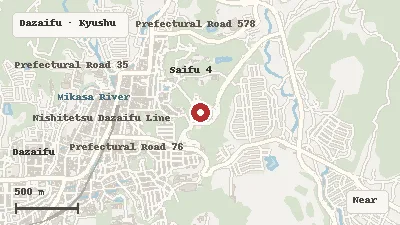
Kyushu National Museum in Dazaifu examines how exchange with Asia shaped Japanese culture. Archaeological objects, religious art and trade-related material form a connected story inside a large contemporary building set against wooded hills. Pair the Cultural Exchange Exhibition with Dazaifu's shrine district, leaving enough time to follow the museum's theme rather than rushing between highlights.
Sample Kumamoto food beneath the castle at Sakura-no-baba Jōsaien.
One of Japan’s three major Chinatowns, a compact cross-shaped district of Chinese restaurants in Shinchimachi.
Explore marine habitats beside Beppu Bay at Ōita's Umitamago.
Hakata-style ramen at ShinShin's Tenjin main shop in central Fukuoka.
Kinko Bay marine life and a large central tank beside Kagoshima's waterfront.
A spring-fed Kumamoto strolling garden shaped around pond views and miniature scenery.
Karatsu Castle's waterfront hill, local-history displays and views over Karatsu Bay.
Station-linked shopping, dining and entertainment at Kagoshima-Chuo.
Hakata Issou's frothy, rich tonkotsu ramen near Hakata Station.
A long underground retail arcade linking central Fukuoka's Tenjin transit network.
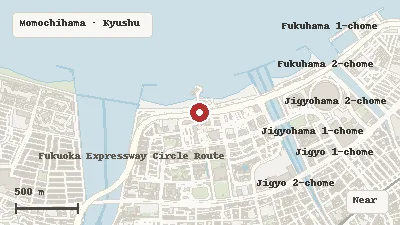
Momochi Seaside Park brings sand, promenades and Hakata Bay views to Fukuoka's modern waterfront district. Fukuoka Tower and Marizon frame the beach, making the urban setting as distinctive as the water. Treat it as a coastal walk in any season, and check the separate seasonal guidance if swimming is part of your plan.
A broad curtain of water across the Ono River in Bungo-Ono countryside.
Clear spring water and a shrine-side setting at Minamiaso's Shirakawa Suigen.
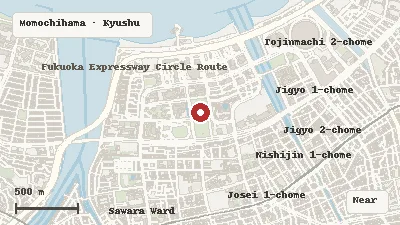
Fukuoka City Museum presents the city's history through its long relationship with continental Asia. The ancient gold seal associated with the state of Na provides a starting point for a wider story of diplomacy, trade and local life. Follow the regional narrative beyond that single object to connect the museum with the city outside.
Choose among Hyotan Onsen's baths in Beppu's Kannawa district.
Follow Hakozaki-gū's approach to its Hachiman shrine precinct.
Walk Yoshinogari's reconstructed Yayoi settlement and burial zones.
Cross Kokonoe's high suspension bridge above the gorge.
View Nabegataki's water curtain from the permitted rear path.
Explore Kujukushima by cruise, aquarium or waterfront stop.
Walk Mifuneyama Rakuen below its rocky mountain backdrop.
Browse Nakasu's evening yatai along the Naka River.
View the broad Sogi Falls cascade from park overlooks.
Bathe at Beppu's historic Takegawara Onsen.
Explore Uminonakamichi's flowers and peninsula cycling paths.
Pair Fukuoka Art Museum's galleries with Ohori Park.
Explore penguin habitats at Nagasaki Penguin Aquarium.
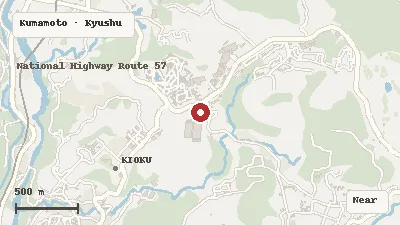
Aso Farm Land is a large Minami-Aso resort complex combining geodesic-dome lodging, hot springs, animal areas, food workshops and outdoor leisure within the volcanic Aso region.
Hakata Kawabata Shopping Arcade brings local shops, eateries and traditional goods together in a commercial street connecting central Hakata temple and entertainment districts.
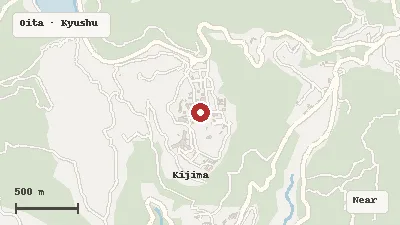
Kijima Kogen Park is a mountain amusement park in Oita Prefecture, combining rides and family attractions with a cooler highland setting and views across the surrounding landscape.
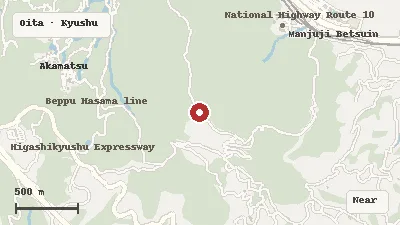
Takasakiyama Natural Zoological Garden is a wild-monkey sanctuary between Oita and Beppu where free-ranging Japanese macaques move through the slopes and gather near feeding areas.
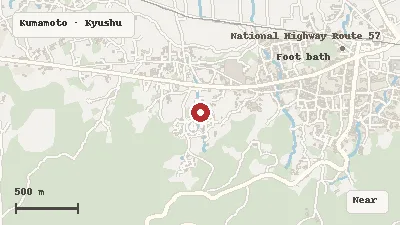
Cuddly Dominion in Aso is an animal park built around close viewing and interactive encounters with species including capybaras and other small and large animals across its grounds.
Kusasenri is a broad grassland inside an old crater on Mount Aso, with a shallow pond, grazing livestock and open views toward the active volcanic landscape of Naka-dake across the plateau.
Showa-no-Machi in Bungotakada revives a mid-20th-century shopping district through retro storefronts, small museums, cafés and local businesses arranged around the old town center.
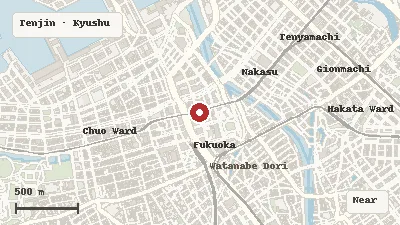
Tenjin Central Park opens a green space between Fukuoka's commercial streets and the riverside. Its lawn faces the planted terraces of ACROS Fukuoka, while the Nishi-Nakasu section includes the historic Kihinkan building. The park occupies the former prefectural government site, giving an ordinary city break a layer of civic history.
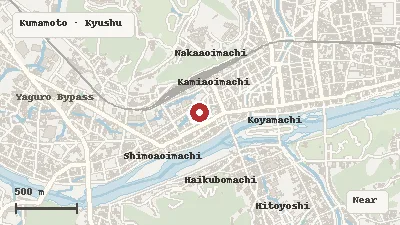
Aoi Aso Shrine in Hitoyoshi was founded in 806 and preserves a group of five designated National Treasures, including distinctive thatched-roof shrine buildings within its historic precinct.
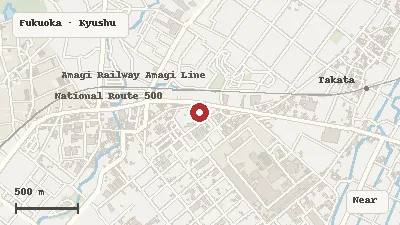
Chikuzenmachi Tachiarai Peace Memorial Museum interprets the former Tachiarai military airfield through aircraft, documents, testimony and the local impact of the Pacific War and 1945 air raids.
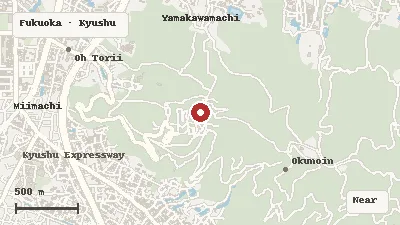
Kora Taisha is a vermilion shrine near the 312-meter summit of Mount Kora, historically the foremost shrine of old Chikugo Province, with major Edo-period halls completed in 1660.
Nagasaki Seaside Park is a landscaped harborfront opened in 2004, linking broad lawns, a water garden and promenade space along the central waterfront beside the Dejima and Tokiwa areas.
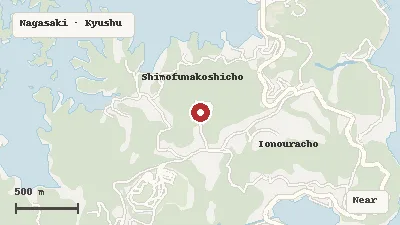
Tenkaiho Observatory looks across Sasebo's Kujukushima islands, with flower fields and quieter walking paths around the wider site beyond the main observation deck.
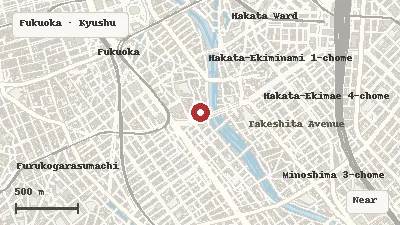
Yanagibashi Rengo Market is a compact covered lane of fishmongers, butchers, produce shops and prepared-food stalls long known as one of central Fukuoka's everyday food markets.
Yobuko Morning Market lines a coastal street in Karatsu's Yobuko area, where seafood stalls and local vendors make fresh fish and simple prepared foods the focus of a compact morning visit.
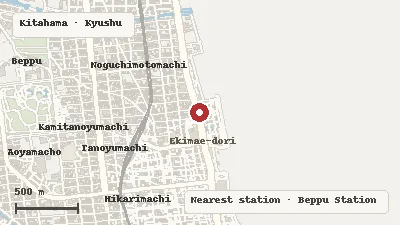
Beppu Tower offers a view of the city and bay from a steel landmark of Japan's postwar tourism era. Opened in 1957 and designed by Tachū Naitō, it belongs to the same tower-building tradition as several better-known urban observatories. Its waterfront setting puts Beppu's coastal geography at the center of the visit.
See the Luffy statue that anchors Kumamoto's ONE PIECE recovery project.
In Oura, A vividly colored Confucian shrine complex and museum built with direct Qing-era Chinese.
Tateyama / Suwa: A major museum of Nagasaki’s overseas-exchange history built around a reconstructed Nagasaki.
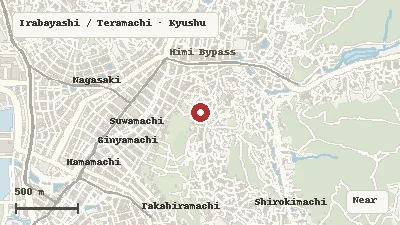
Nagasaki Kameyama Shachū Memorial Museum introduces the trading and maritime group associated with Sakamoto Ryoma in a restored house linked to its history. The domestic scale brings a period of political and commercial change into a tangible setting, with exhibits explaining the organization’s place in late-shogunate Nagasaki.
A stone-paved slope through the former foreign-settlement district of Higashiyamate.
Find Nami at Moe no Sato on Kumamoto's ONE PIECE recovery trail.
Meet Chopper beside Kumamoto's zoo on the ONE PIECE recovery route.
The restored former Dutch trading post that served for roughly two centuries as Japan’s — Dejimamachi / Nagasaki Waterfront.
Slow down beside the pond and tea rooms at Fukuoka's Yusentei Park.
Find Franky beside Takamori Station on the Kumamoto recovery trail.
Pair the Nico Robin statue with Kumamoto's KIOKU earthquake-memory site.
See Zoro in Ozu Central Park on Kumamoto's Straw Hat statue route.
Meet Usopp directly outside JR Aso Station on the Kumamoto statue trail.
See Sanji in Mashiki and the food-linked story behind his placement.
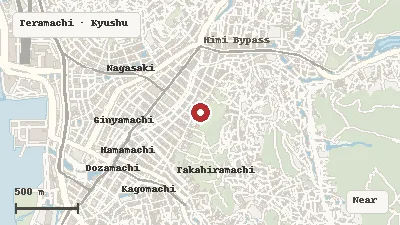
Kōfuku-ji brings Nagasaki’s Chinese community and Ōbaku Zen history into the temple streets of Teramachi. Its Chinese-influenced architecture and connection with the monk Ingen make it a place to consider how religious practice travelled through the port and became part of the city’s cultural landscape.
In Fureai Hiroba / Mifune, the Brook bronze statue in Mifune’s Fureai Hiroba, close to the town’s dinosaur museum.
In Sumiyoshi Kaigan Park / Uto, the large Jinbe bronze statue at Sumiyoshi Kaigan Park in Uto.
A large Tenjin amusement center with crane, purikura, driving, shooting, rhythm, video, card.
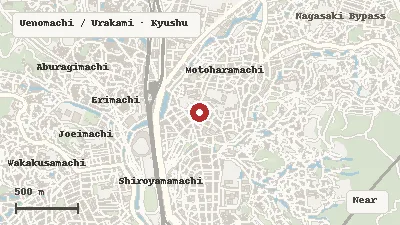
Nyokodō preserves the tiny hut where physician and atomic-bomb survivor Takashi Nagai spent his final years writing. Its two-tatami scale brings his postwar life into close focus, connecting a modest personal space with the themes of faith, neighbourly love and peace that shaped his work.
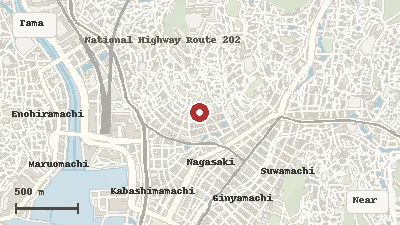
Shōfuku-ji is an Ōbaku Zen temple in Nagasaki whose historic buildings and reused roof-tile wall reward close attention. The combination of religious architecture and carefully assembled tile surfaces gives the grounds a distinctive character within the city’s Chinese-influenced temple heritage.
A rare cluster of seven late-nineteenth-century wooden Western-style residences packed; a stop in Higashiyamate.
Thanks for helping us improve. We have received your feedback.