
Why go
The experience centers on observing macaques within a long-established free-ranging population rather than seeing them in conventional zoo enclosures. Feeding periods can bring the animals close, making troop behavior and social dynamics easier to watch.
Field Notes
Takasakiyama Natural Zoological Garden differs from a conventional zoo because the Japanese macaques observed there are free-ranging animals from the surrounding mountain. The forested slopes rise between Ōita and Beppu, and records cited by the park show that macaques lived on Takasakiyama long before the modern attraction existed. The present system began as a response to human–animal conflict: in the early postwar years, monkeys descending into farmland caused serious crop damage.
Ōita mayor Tamotsu Ueda proposed feeding macaques at a fixed point to reduce that conflict while creating a managed observation site. The experiment began in 1952 and initially struggled because the wild animals did not immediately approach. Sweet potatoes eventually attracted them, and the formal zoological garden opened in March 1953 with a troop known as Group A. As populations and social structures changed, additional troops separated over the following decade. Group A later stopped appearing at the feeding ground, while other troops continued to use the area.
The monkeys move between forest and feeding ground under their own power. Staff provide supplemental food, including small portions of wheat and scheduled sweet-potato feedings, but the animals remain free to leave. That gives visitors a close view of grooming, dominance, juveniles and changing troop relationships without cages defining the experience. It also means the animals should still be treated as wild. Touching, teasing, staring directly into their eyes or feeding them independently can create unnecessary conflict.
More than seventy years of records have made Takasakiyama an unusual long-term observation site for macaque social life. The place is neither untouched wilderness nor a collection of captive animals; it is a managed interface created from a practical agricultural problem. Buses from Ōita or Beppu provide the usual public-transport approach. Visitors should allow time for the animals’ movements rather than expecting a staged show on command and should use the current operating notice for opening, last admission and any temporary closures. The value of the visit lies in seeing how a free-ranging troop uses a predictable human-managed feeding ground while remaining part of the mountain environment.
Current operating hours and last-admission rules should be checked because the monkeys’ own movements are not controlled by a fixed performance schedule.
Planning Notes
Suggested time on site: 90–150 minutes. Keep travel and waiting time separate from that estimate.
Access reference: Bus from Oita Station or Beppu Station to the Takasakiyama stop. Check the final walking or connecting leg when choosing your route.
The last park admission is 16:30 and the final downhill monorail leaves at 16:50. Macaques are wild and may not appear; their morning/afternoon troop pattern and feeding schedule do not guarantee sightings.
Location
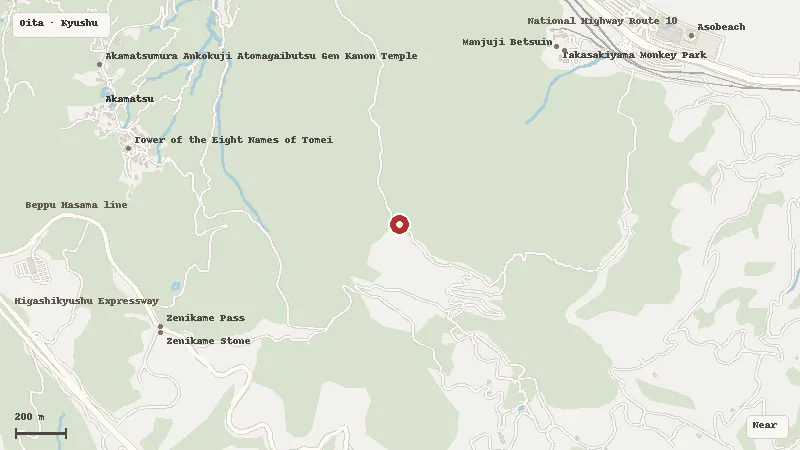
Map data © OpenStreetMap contributors