
Why go
Come for the broader hilltop setting as much as the deck itself. The Kujukushima panorama is joined by flower fields and quieter paths, so a 45–120 minute visit has room for both the principal viewpoint and a slower walk away from the busiest observation area.
Field Notes
Tenkaiho gives the southern Kujukushima landscape a broad, elevated introduction. The viewing area stands about 165 meters above sea level, with an outlook described by Sasebo tourism as a 180-degree panorama. Islands and Sasebo Port appear together, making it a useful place to understand the relationship between the city's harbor and the island-filled sea beyond. Daylight emphasizes the channels and shorelines, while evening changes the view toward silhouettes and reflected light. Choose the timing according to what you want to see rather than assuming a sunset visit is always the best one.
The name Kujukushima does not describe an archipelago of exactly ninety-nine islands. Sasebo's official guide identifies 208 islands extending northward from outside the port toward Hirado Strait over about twenty-five kilometers. Tenkaiho is one vantage point onto that wider landscape, so the islands visible from the platform should not be mistaken for the entire group. This context makes the viewpoint particularly useful before a coastal excursion: it gives an overview of a densely broken shoreline that can feel very different when experienced close to the water.
Flowers add a second focus below the viewing platform. Nagasaki's tourism guide describes rapeseed blossoms in spring and cosmos in autumn, with the garden forming a colorful foreground to the sea. The usual seasons fall around late March to early April and the latter part of October, but actual conditions should guide a flower-focused trip. Allow time to look at the planting as well as the distant view. The relationship between a cultivated foreground and the natural island horizon is one of the site's distinctive visual pleasures, especially when the light changes across both.
Access deserves more thought than the short time needed at the platform itself. The Sasebo guide warns that local bus services are very limited, so establish the return journey before setting out. A car or taxi gives more flexibility for changing light, while bus visitors need to fit the stop into the available service. Check the destination carefully when arranging transport: the tourism information center's telephone number is an inquiry contact, not a navigation point for the observatory. With transport settled, the visit can remain simple: panorama, flower garden and time to watch the water.
Planning Notes
Suggested time on site: 45–120 minutes. Keep travel and waiting time separate from that estimate.
Access reference: JR Sasebo Station → bus toward Kujukushima/Tenkaiho area, about 40 minutes. Check the final walking or connecting leg when choosing your route.
Location
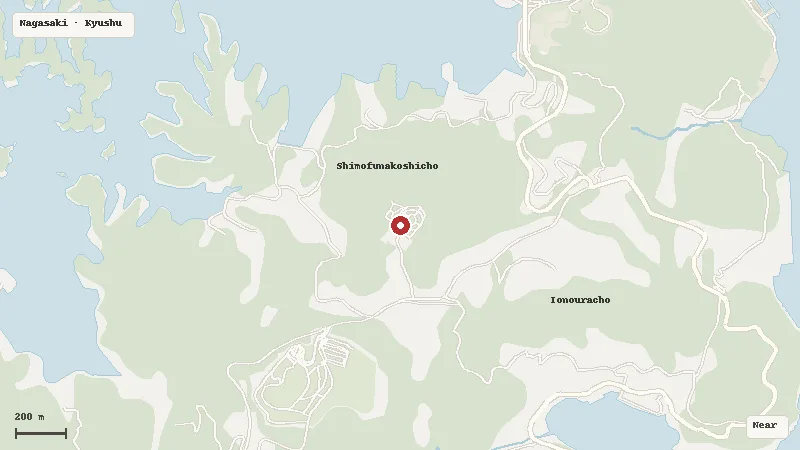
Map data © OpenStreetMap contributors