
Why go
The shrine's significance is architectural as well as devotional. Five structures are designated National Treasures, making the compact precinct a focused stop for historic shrine construction; Hitoyoshi Station is close enough for a 45–90 minute visit on foot or by taxi.
Field Notes
Aoi Aso Shrine rewards close looking, especially at the gate through which visitors approach the worship hall. Hitoyoshi's city guide describes the twelve-meter romon as having a steep thatched roof and unusually expressive carved faces at its corners. Other carvings draw on Confucian stories, dragons, lions and flowers. Together they make the entrance more than a threshold: it introduces the combination of religious and decorative traditions used across the shrine. Founded in 806, the institution is much older than most of the present buildings, which the city dates to the early seventeenth century. The coordinated ensemble is particularly striking because historic shrines often contain buildings from several unrelated rebuilding periods. Here, the gate, worship hall, offering hall, main sanctuary and connecting corridor form the National Treasure group. Notice how the rich Momoyama decoration sits alongside details associated with Zen architecture and regional Kuma construction. The shrine is also a living ceremonial setting, with its Okunchi celebrations preserving local procession and kagura traditions rather than existing only as an architectural display.
For a fuller introduction, pair the historic precinct with the Aoi no Mori National Treasure Memorial House. Completed in November 2023, this modern building was designed by Kengo Kuma to respond to the shrine's older architecture. Its wooden louvered roof interprets the visual presence of thatch without simply reproducing an old shrine building. Timber drawn from the wider Hitoyoshi-Kuma area gives the structure a material connection with the region as well as a visual one. The permanent gallery introduces the shrine's long history, its cultural properties and the surrounding area, so it can help visitors identify details that are easy to miss outdoors. The shrine buildings received National Treasure designation in 2008, recognizing their preservation of medieval Kuma forms together with elaborate Momoyama ornament. Seen together, the museum and shrine offer two approaches to the same question: how local craftsmanship can remain recognizable while architecture changes. Plan the museum as a separate interpretive component of the visit, allowing enough time to return to the older buildings with the exhibition's explanations in mind. The contrast is especially useful for travelers interested in wood, roof forms and the relationship between contemporary design and a protected religious setting.
Planning Notes
Suggested time on site: 45–90 minutes. Keep travel and waiting time separate from that estimate.
Access reference: Hitoyoshi Station; walk/taxi. Check the final walking or connecting leg when choosing your route.
The shrine’s annual outline places Okunchi on October 3–11, with Kuma kagura on the evening of October 8 and the procession on October 9. The detailed outline describes around three hours of kagura. This is an annual pattern, not a separately verified 2026 event announcement; check current arrangements and road restrictions before attending.
Location
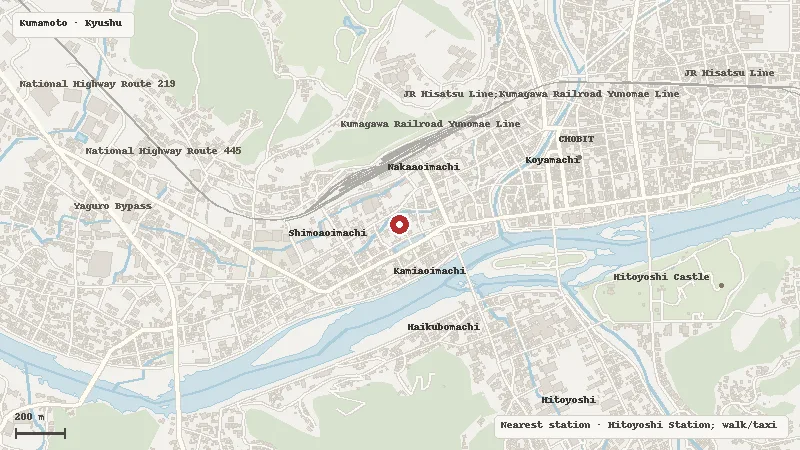
Map data © OpenStreetMap contributors