KyotoFeaturedPublic
Fushimi Inari Taisha
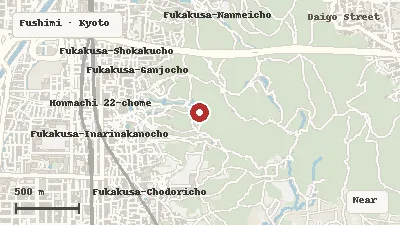
伏見稲荷大社Fushimi Inari Taisha's torii-lined paths climb Mount Inari from the main shrine complex. Fox figures and smaller shrines mark the route through the wooded slopes.


Kyoto
Build a Kyoto route from curated places, then use each guide’s practical context to decide what belongs in the itinerary.
Fushimi Inari Taisha's torii-lined paths climb Mount Inari from the main shrine complex. Fox figures and smaller shrines mark the route through the wooded slopes.
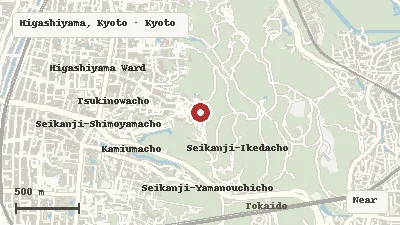
Kiyomizu-dera's wooden stage projects from the hillside above eastern Kyoto. The temple's Kannon devotion and the waters of Mount Otowa shape its history and name.
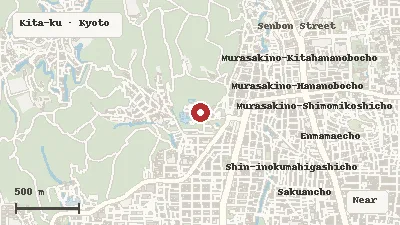
Rokuon-ji's gold-clad pavilion faces Kyokochi Pond, creating one of Kyoto's best-known temple views. The garden frames the building as part of a larger Zen landscape.
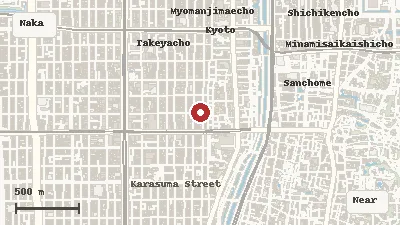
Kyoto's Nishiki Market gathers pickle sellers, seafood specialists, sweets and cooking supplies along a covered shopping street. It is a place to browse ingredients as well as prepared food. Follow the market association's request to eat at the shop where you buy food instead of walking with it through the narrow arcade.
Explore Nijō Castle’s palace rooms and gardens, looking at how paintings, carved details and the order of spaces expressed shogunal power.
Visit Yasaka Shrine between Gion’s streets and the Higashiyama landscape, taking time to see the religious setting behind Kyoto’s Gion Matsuri traditions.
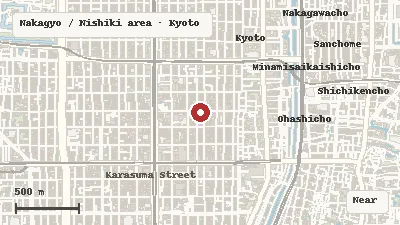
SAMURAI NINJA MUSEUM KYOTO introduces warrior history through displays of armor and weapons, guided explanation and hands-on activities. The experience-led format is the reason to choose it, rather than expecting a preserved samurai residence. Check which activities are included in the program you book before fitting it into a central-Kyoto day.
Look upward through Arashiyama's bamboo canopy on a short walk woven into the wider Sagano district.
See the Phoenix Hall across its pond, then explore the art that gives Byodoin's Pure Land setting its meaning.
Look beyond Toji's pagoda to the sculptural mandala that makes its Buddhist teaching visible within the Lecture Hall.
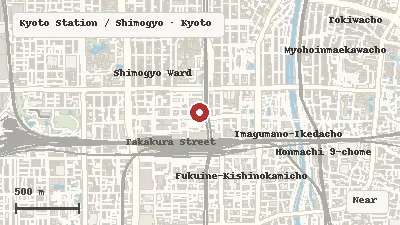
Across from Kyoto Station, Kyoto Tower's observation deck offers a view over the city basin and its mountain edges. The elevated perspective helps connect otherwise scattered districts before exploring them at street level. Its station-side position makes it a possible viewpoint stop at the beginning or end of a Kyoto visit.
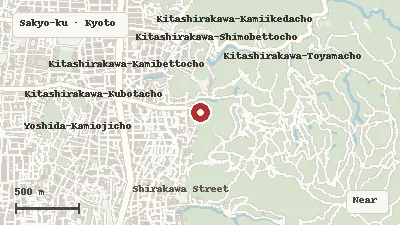
Ginkaku-ji brings the Silver Pavilion, sculpted sand and mossy hillside paths together at the edge of Kyoto's eastern hills. The pavilion's dark exterior is part of its character; the name does not describe a silver-covered building. Follow the garden circuit for changing views of the temple, then continue toward the Philosopher's Path if a longer walk appeals.
Encounter the scale and individual detail of Sanjusangendo's 1,001 Kannon figures inside a long Kyoto temple hall.
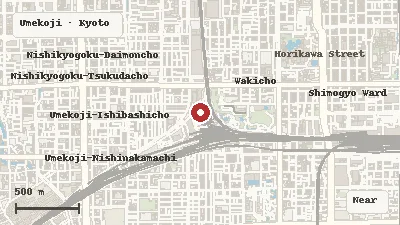
Kyoto Railway Museum sets steam locomotives and Shinkansen vehicles beside the historic Umekoji roundhouse and turntable. The maintenance buildings help explain how the preserved trains were operated, while nearby active lines connect the collection with today's railway. Allow time for both the vehicles and the working-system displays; individual experiences follow their own programs.
Study the pond, rocks and borrowed mountain scenery that give Tenryuji's garden its depth.
Discover Kitano Tenmangu through its learning traditions, ornate buildings and seasonal gardens.
Vermilion halls evoke old Kyoto; the Shin'en garden offers a different, quieter circuit.
Enter Shimogamo Shrine through Tadasu-no-Mori's wooded Kyoto approach.
Meet Kyoto's giant salamander alongside penguins and other aquatic exhibits.
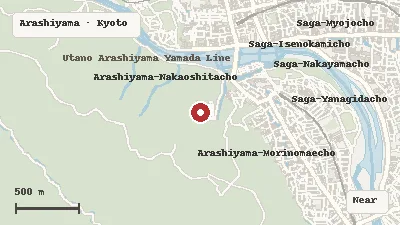
An uphill path leads from Arashiyama to the macaques and Kyoto views at Monkey Park Iwatayama. The animals move freely around the mountainside, while visitors observe them under the park's rules. Factor the climb into your plans and follow staff directions on distance and feeding; the hillside setting is as much a part of the outing as the monkeys.
Follow the lantern-lined steps into Kifune's water-shrine valley.
See a Zen gate, garden and canal aqueduct in one eastern Kyoto precinct.
Find vast timber Buddhist halls a short walk north of Kyoto Station.
Walk Ninenzaka's stone slope through Kyoto's Higashiyama lanes.
Sit with Ryōan-ji's fifteen-rock garden, then walk its wider grounds.
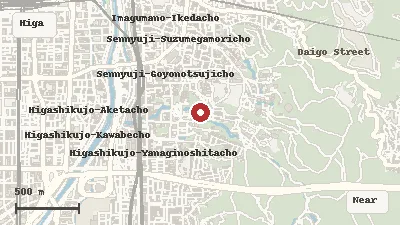
Tōfuku-ji brings monumental Zen architecture, a maple-filled ravine and Mirei Shigemori's modern gardens into one Kyoto temple visit. Tsūtenkyō crosses the ravine, while the Hōjō gardens offer a different way to read the landscape through stone, moss and geometric composition. Allow time for both settings instead of making the bridge the whole visit.
Walk Toei's renewed Edo-style streets and check the day's shows.
Kōdai-ji layers Nene and Hideyoshi history with gardens, bamboo and temple halls.
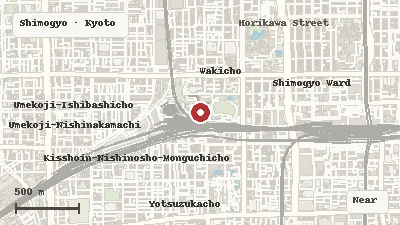
Umekoji Park connects broad lawns and landscaped paths with the museum-and-aquarium district west of Kyoto Station. Suzaku-no-niwa adds a more formal garden setting within grounds created on former railway land. Use the park for an outdoor pause between attractions, or give its open spaces and garden a visit of their own.
Look down on Amanohashidate from View Land's Monju-side hill.
Miyama's Kayabuki-no-Sato preserves a lived-in cluster of thatched farmhouses.
See Zen gardens and twin-dragon art at Gion's Kennin-ji.
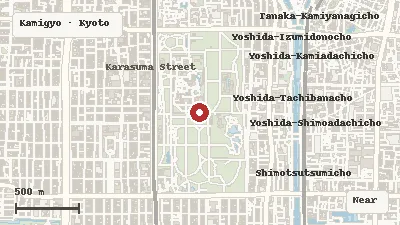
Kyoto Gyoen surrounds the Imperial Palace with broad gravel avenues, groves and traces of the former court-noble district. Historic gates and residence sites give the open landscape a history that extends beyond the palace walls. Use the garden for an unhurried walk, arranging access to the imperial compounds separately if they are part of your plans.
Sanzen-in's moss, cedars and temple halls define Ōhara's mountain atmosphere.
Imperial temple history, palace gardens and late-blooming Omuro cherries at Ninna-ji.
A small Kyoto shrine known for its gold torii and metalworking associations.
Working funaya boathouses along Ine's sheltered fishing-village waterfront.
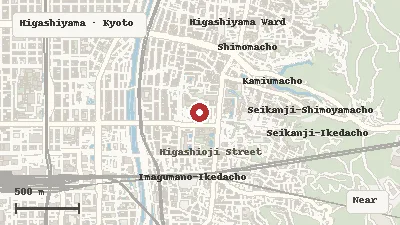
Kyoto National Museum brings premodern art and cultural properties into a campus combining Meiji-era architecture with the modern Heisei Chishinkan. Its subject matter connects closely with the temples and shrines of the surrounding city. Check the exhibition calendar before arranging a gallery visit: between programs, access may be limited to the gardens and outdoor exhibits.
A century-old Kyoto botanical garden with broad outdoor collections and a conservatory.
Gion teahouses and restaurants along Hanamikoji's working public street.
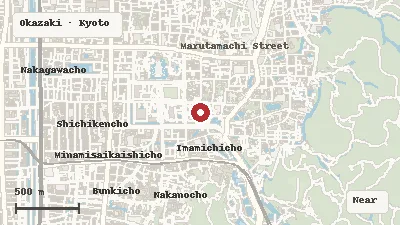
Kyoto City Zoo brings compact animal habitats into Okazaki's wider museum-and-shrine district. Its modern layout includes areas focused on different environments, with Kyoto Forest adding a regional connection alongside the broader collection. Allow time for observation within the zoo, then decide which nearby cultural stops fit the rest of the day.
A north-side Amanohashidate panorama reached above the Fuchu shore.
Open manga shelves and exhibitions inside a former Kyoto elementary school.
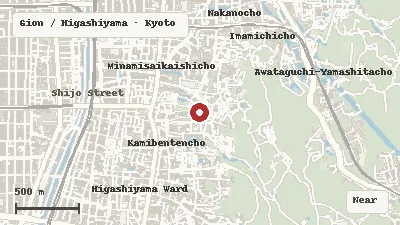
Kyoto's Maruyama Park opens behind Yasaka Shrine into ponds, hillside paths and planted gathering spaces. Its weeping cherry is a spring landmark, while the wider landscape links the Gion edge with other Higashiyama sites. Follow the park beyond the central tree to appreciate it as a strolling route shaped by the slope.
Explore Daigo-ji's pagoda and its layered lower precinct.
View Shirahige Shrine's torii from the designated lakeside viewpoint.
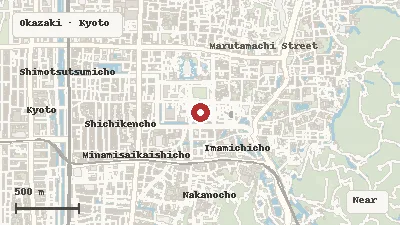
Kyoto City KYOCERA Museum of Art layers contemporary exhibition spaces onto its landmark 1933 building in Okazaki. The renewed entrance, courts and galleries make the architecture part of the experience alongside Kyoto-related art and temporary shows. Choose a program that interests you, then leave time to see how the old structure and newer additions meet.
Visit Nishi Hongan-ji's vast halls and active temple precinct.
Cross Togetsukyo for Arashiyama's river-and-hill view.
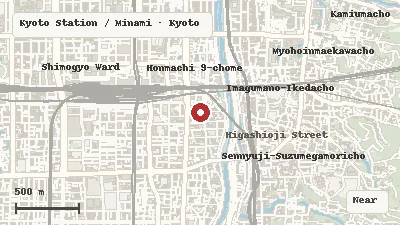
teamLab Biovortex Kyoto presents immersive artworks that explore how bodies, movement and perception affect the experience of a space. Light, sound and changing environments invite visitors to move through the work rather than observe it from a fixed viewpoint. Located near Kyoto Station, the museum rewards time to explore, with current artwork availability and participation guidance checked before arrival.
Explore Fushimi sake history at Gekkeikan's Ōkura museum.
Walk Ishiyama-dera's rock-lined temple paths in Otsu.
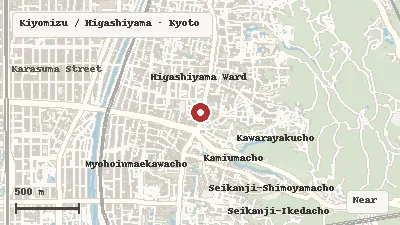
MOCOMOCO's Kiyomizu-dera branch offers kimono rental near the Higashiyama walking routes leading toward Kiyomizu-dera and the preserved shopping slopes. Choosing and putting on the outfit becomes the starting point for a neighborhood outing. Allow time for dressing and walking on inclines, and confirm the selected package, branch location and return arrangements when booking.
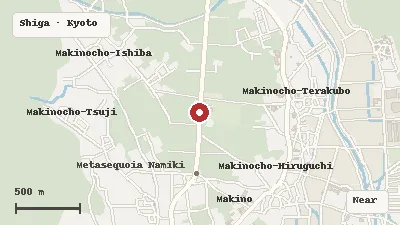
Makino Metasequoia Avenue runs for about 2.4 kilometers toward Makino Kogen, with roughly 500 dawn redwoods forming a long, straight corridor that changes strongly with the seasons.
Explore Nintendo's cards, toys and games at its Uji museum.
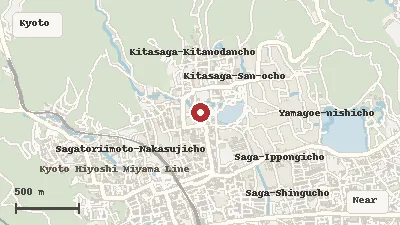
Daikaku-ji began as Emperor Saga's detached villa before becoming a temple, and its precinct still incorporates Osawa Pond, one of Japan's oldest surviving artificial garden ponds.
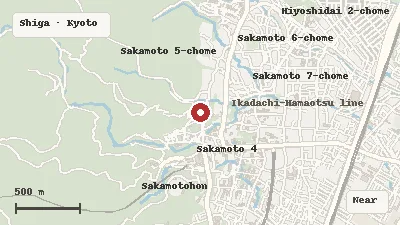
Hiyoshi Taisha spreads across roughly 468,000 square meters of wooded ground at Mount Hiei's foot in Sakamoto and serves as the head shrine for thousands of Hiyoshi, Hie and Sannō shrines.
The Philosopher's Path follows a canal through eastern Kyoto between the Ginkaku-ji area and temples near Nanzen-ji, creating a walk shaped by water, trees and neighborhood streets.
Start an Arashiyama kimono day near Randen Arashiyama Station.
Browse animate's anime and manga goods in central Kyoto.
Go to Wazuka for a reservation-led farm-to-cup matcha experience.
Begin a Higashiyama kimono walk from Okamoto's Kiyomizu-area shop.
Rent kimono near Yasaka Shrine for a Gion and Higashiyama walk.
Join a booked maiko tea ceremony and dance program in Kyoto.
Visit Nintendo's official Kyoto store at Takashimaya T8.
Dress on Ninenzaka for a Kiyomizu and Higashiyama kimono walk.
Start a Kiyomizu-area kimono outing from Waka in Higashiyama.
Animate branch inside Kyoto Avanti near Kyoto Station, stocking anime, manga, games; a stop in Kyoto Station / Hachijo.
Sit for freshly prepared wagashi and garden views at Saryo Housen.
Browse physical music and artist merchandise at Tower Records Kyoto.
In Shijo Kawaramachi / Takashimaya T8, kyoto branch of the famous secondhand collectibles chain, inside Kyoto Takashimaya S.C.
Shijō / Nishinotōin: A central Kyoto kimono specialist carrying new and recycled garments, obi, fabric bolts.
A multi-level Gion-area shop for vintage and secondhand kimono, haori; a stop in Gion / Higashiyama.
Teramachi / Shijo: A Kyoto branch of Japan Anime & Character Shop Guf carrying anime, character, figure, apparel.
The Kyoto headquarters shop of a publisher founded around Urasenke tea culture; a stop in Murasakino / Kuramaguchi.
Hareruya 2's Kyoto Pokémon-card store close to Kyoto Station.
A reservation-based tea-ceremony experience in a traditional house opposite Ryoan-ji in Ryoan-ji / Ukyo Ward.
A current Kyoto Amenity Dream branch for trading-card singles, products in Kawaramachi / Ura-Teramachi.
In Shijo / Kawaramachi, A combined BABY and ALICE and the PIRATES boutique in Kawaramachi OPA.
The Kyoto directly-managed shop for Metamorphose temps de fille; a stop in Teramachi.
Angelic Pretty's Kyoto boutique, reopened in July 2026 near Shijo-Kawaramachi — Shijo / Kawaramachi.
Yellow Submarine's Kyoto tabletop and trading-card branch near Shinkyogoku — Kawaramachi / Shinkyogoku.
A transformation portrait studio from the Kyoto Kokoro Group; a stop in Arashiyama / Randen Station.
Ninenzaka / Higashiyama: A small kimono and yukata rental whose own site identifies the branch as its Ninenzaka Store.
A central Kyoto GiGO branch in the Shinkyogoku shopping district — Shinkyogoku / Kawaramachi.
Thanks for helping us improve. We have received your feedback.