
Why go
The combination of medieval temple buildings and twentieth-century garden design rewards a visit beyond autumn foliage season.
Field Notes
Plan the Hōjō gardens and the Tsūtenkyō–Kaisandō area as two distinct parts of the visit. The temple lists separate admissions, with combined-ticket arrangements that differ during the busy autumn period. Check the current options before choosing a route, especially if your main interest is Shigemori’s gardens rather than the maple ravine. The temple does not allow re-entry, so it is worth deciding what to see before leaving a paid area.
The four gardens surrounding the Hōjō were designed by Mirei Shigemori in 1939. Their deliberately composed spaces offer a useful contrast to the changing foliage seen around the bridge. Outside those gardens, the precinct’s monumental buildings give the visit a wider architectural setting. Autumn rules can also affect photography on the bridges, and tripods are prohibited in the grounds. Follow the day’s signs rather than assuming that a familiar camera position will be available.
Planning Notes
Suggested time on site: 1.5–2.5 hours. Keep travel and waiting time separate from that estimate.
Timing noted for this stop: Nov 14–Dec 6, 2026: Tsutenkyo opens 08:30; Hojo Garden 09:00. Both stop reception at 16:00; autumn common tickets are unavailable.
Access reference: JR or Keihan Tofukuji Station - about 10 minutes on foot. Check the final walking or connecting leg when choosing your route.
On October 5, 2026, admission to Tsutenkyo, Kaizando and Hojo Garden is suspended all day for a ceremony, but precinct worship remains possible. November 14–December 6 reception starts at 08:30 for Tsutenkyo and 09:00 for Hojo Garden; reception ends at 16:00 and no combined ticket is sold. Winter reception ends at 15:30 from December 7. These are paid-area windows, not complete precinct access hours.
Location
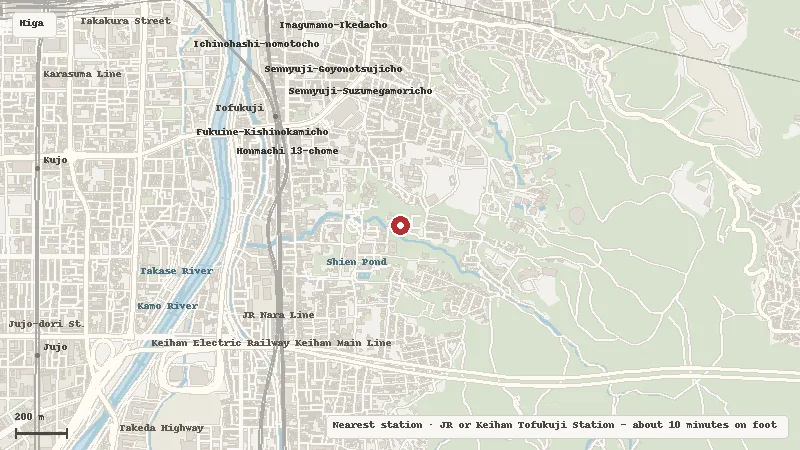
Map data © OpenStreetMap contributors