
Why go
The scale and religious role make Hiyoshi Taisha more than a neighborhood shrine stop. Its wooded precinct at Mount Hiei's foot anchors a shrine tradition represented by thousands of related sanctuaries, while Sakamoto-hieizanguchi Station is about a ten-minute walk away.
Field Notes
Begin a Hiyoshi Taisha visit by locating the eastern and western main sanctuaries rather than treating the first impressive building as the whole shrine. Around forty shrines occupy the precinct, with seven forming its principal Sanno group. The eastern main shrine enshrines Oyamakui, while the western main shrine honors Onamuchi. These separate centers help explain why the grounds feel like a religious landscape with several destinations. Hiyoshi traces its beginnings to the traditional reign of Emperor Sujin, about 2,100 years ago. Its later relationship with nearby Enryakuji made it a protector of Tendai Buddhism, while its position northeast of the old capital gave it a role in prayers against directional misfortune. Those connections place this Sakamoto shrine within a much wider religious geography: it heads a network of more than 3,800 Hiyoshi, Hie and Sanno shrines.
Look closely at the western gate for a smaller-scale way into that history. Monkey figures occupy its four corners in different poses, and further monkeys appear among the decorations on its upper front. The shrine calls these divine messengers masaru, linking the name with auspicious wordplay about overcoming difficulties and driving evil away. Its monkey guide also identifies a stone beside the eastern approach whose shape resembles a crouching monkey. Saruzuka offers a different encounter with the same tradition: the exposed stone feature belongs to an ancient burial chamber, around which stories developed about sacred monkeys and a passage toward Karasaki. These are shrine legends associated with a physical archaeological feature, rather than evidence of an underground route that visitors can follow.
The grounds cover approximately 468,000 square meters, so choose the parts of the precinct that matter most to you before adding other Sakamoto sights. The shrine lists two National Treasure buildings and seventeen Important Cultural Property buildings, giving architecture as much prominence as the wooded setting. Staffed worship services and the amulet and seal counters normally operate from 09:00 to 16:00, although the eastern and western gates open earlier according to season. Early access to the grounds should therefore be planned separately from collecting a shrine seal or requesting a prayer service. Check the shrine's current notices when severe weather is forecast, because reception areas may close for safety.
Planning Notes
Suggested time on site: 40 minutes for the precinct; 60 for groups, 90 in foliage season; add 60 for the Okumiya return hike. Keep travel and waiting time separate from that estimate.
Access reference: Keihan Sakamoto-hieizanguchi Station; about 10 minutes on foot. Check the final walking or connecting leg when choosing your route.
The shrine estimates about 40 minutes for its precinct circuit, about 60 minutes for groups and 90 minutes during autumn foliage. The optional route from the precinct trailhead to Okumiya is about 1 km and 30 minutes each way, adding roughly an hour of walking before stops. It is steep and requires suitable footwear; there is no vehicle access.
Location
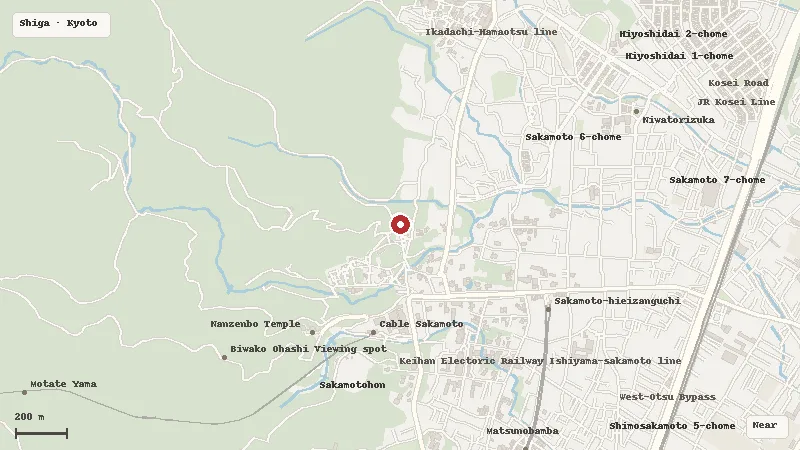
Map data © OpenStreetMap contributors