
Why go
The park adds a landscaped walking route between major Higashiyama sites, with an identity extending beyond blossom season.
Field Notes
The celebrated weeping cherry is a successor to an older tree, rather than the same ancient specimen seen in every historical picture. The first tree died in 1947. Sano Toemon XV had collected its seed in 1928 and raised another tree, which was planted here in 1949. That continuity depends on horticultural care as well as age, a useful way to think about a living landmark whose appearance changes from year to year.
Beyond the cherry, follow the water towards the hillside and notice the crossings. Municipal park staff describe a deliberate transition from substantial built bridges near Hyotan Pond to more rustic wooden bridges and stepping stones upstream. The route moves visually from city towards mountain, using the scale of the adjoining Higashiyama scenery. Even the streambed stones were individually numbered and carefully reset during restoration. These details give the walk an interest that lasts after the blossom has fallen.
Planning Notes
Suggested time on site: 1–2 hours. Keep travel and waiting time separate from that estimate.
Timing noted for this stop: Early morning; cherry-blossom season is busiest.
Access reference: Gion-Shijo Station or Higashiyama Station; walk through the Gion/Yasaka area. Check the final walking or connecting leg when choosing your route.
Location
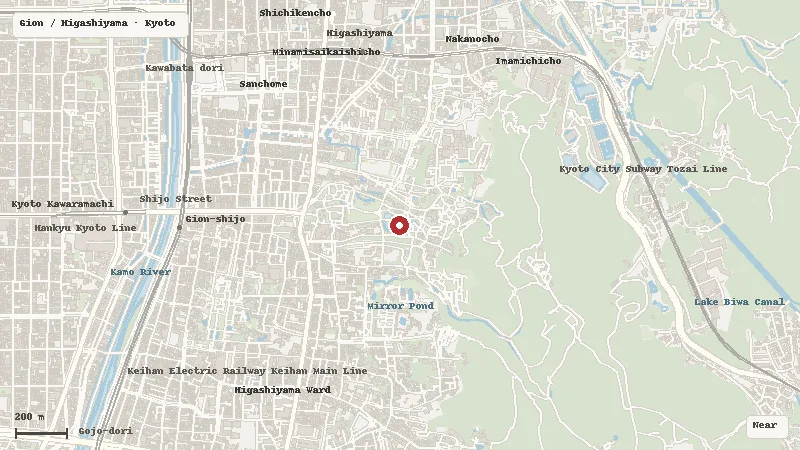
Map data © OpenStreetMap contributors