
Why go
Choose Nishiki for a concentrated introduction to Kyoto ingredients and the shops that supply them.
Field Notes
Cold groundwater helped make this narrow street a food centre long before refrigeration. The market association explains that wells were used to preserve perishables, while a central location made deliveries to the Imperial Palace convenient. Official recognition of Nishiki’s fish wholesalers in 1615 established an important stage in its development. This background helps explain why specialist ingredients remain as important to its identity as ready-to-eat snacks.
There is an art history to notice as well. Ito Jakuchu was born into a Nishiki greengrocery family, and the association credits him with helping defend the market’s trading rights in the eighteenth century. A marker near the western entrance commemorates his birthplace, while reproductions of his paintings appear on shop shutters and elsewhere in the street. Looking for those images adds another layer to a food-focused visit: the vegetables and everyday commerce of Nishiki also formed the world of one of Kyoto’s best-known painters.
Planning Notes
Suggested time on site: 60–90 minutes. Keep travel and waiting time separate from that estimate.
Timing noted for this stop: Weekday morning; many shops close January 1–3, so confirm your chosen shops before a New Year visit.
Access reference: Kyoto-Kawaramachi Station / Karasuma Station / Shijo Station. Check the final walking or connecting leg when choosing your route.
Location
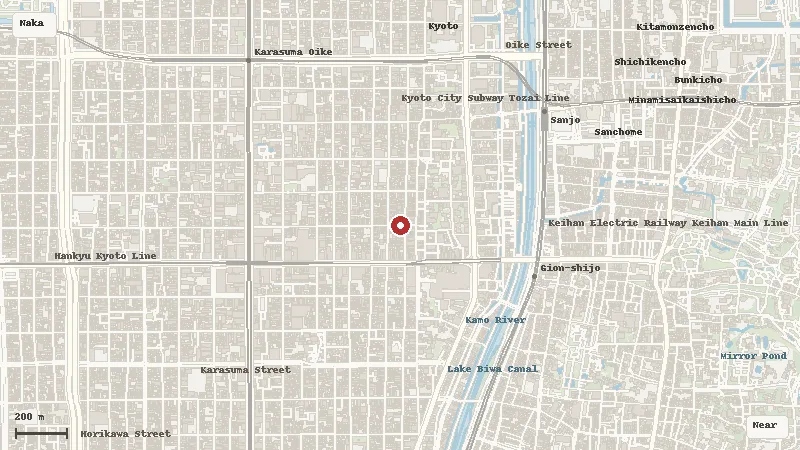
Map data © OpenStreetMap contributors