
Why go
The famous gates are part of a much larger shrine landscape, so a visit can be as brief or as long as the uphill walk you choose. Inari's fox messengers appear around the precinct, and the mountain route passes smaller places of worship as it rises beyond the busiest entrance. Take time to notice the change from dense gate corridors to quieter forest stretches. Follow shrine guidance and keep paths clear for worshippers.
Field Notes
The buildings at the foot of Mount Inari record repeated renewal rather than one surviving eighth-century complex. The shrine dates its foundation to 711, but its mountain and lower buildings burned in the warfare of 1468. Reconstruction followed in 1499, while the great entrance gate was built in 1589 with offerings from Toyotomi Hideyoshi. These dates help distinguish the ancient religious institution from the later architecture visitors encounter.
The torii are contributions to that continuing story. The shrine explains that donating gates became widespread in the Edo period as a way of expressing a prayer or giving thanks for its fulfilment. Look also for inscribed stones called otsuka: worshippers offered these under the different names by which they venerated Inari. Alongside built sanctuaries are shinseki, former shrine sites still regarded as sacred after their buildings have disappeared. The mountain walk therefore passes through layers of personal devotion as well as monumental architecture.
Folklore & legends
In the shrine’s religious tradition, the foxes are Inari’s messengers rather than the deity itself. The invisible sacred messengers are called white foxes, or byakkosan. Vermilion likewise carries meaning: the shrine associates the colour with protection and the abundance of harvests. These explanations give the statues and gate corridors a devotional context beyond their striking appearance.
Planning Notes
Suggested time on site: 2–4 hours. Keep travel and waiting time separate from that estimate.
Timing noted for this stop: Daylight for Inariyama; use rail. For formal prayers, finish reception by about 16:00; New Year and festival arrangements can differ.
Access reference: JR Inari Station / Keihan Fushimi-Inari Station. Check the final walking or connecting leg when choosing your route.
Location
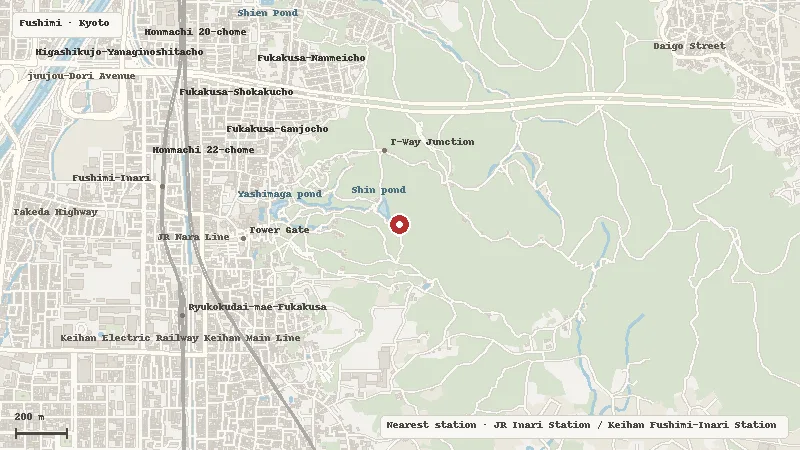
Map data © OpenStreetMap contributors