
Why go
The combination of temple architecture and former imperial-villa landscape gives Daikaku-ji a different rhythm from denser Kyoto temple precincts. Osawa Pond expands the experience outward, making the relationship between buildings and designed scenery especially clear.
Field Notes
Daikakuji's name and layout preserve the memory of an imperial retreat in Kyoto's Saga area. The temple originated in the early-Heian villa of Emperor Saga and later became a distinguished Shingon Buddhist institution. Its status as a monzeki temple reflects a succession of chief priests drawn from the imperial family, beginning with Saga's grandson Prince Gojaku. This connection gives the visit a useful theme: a place associated with courtly life became a religious centre, and the visitor encounters those identities together rather than in neatly separated historical periods.
The buildings make that relationship tangible. Shinden Hall was once an imperial residence associated with Tofukumon-in Masako and was presented to the temple by Emperor Go-Mizunoo. The ceremonial entrance was also moved from the Imperial Palace. Corridors link halls and frame changes of view, encouraging a slower circuit in which painted interiors and architecture receive as much attention as the garden. In Godaido, the main hall, the Five Wisdom Kings provide a reminder of the site's religious purpose. Its use for sutra copying connects the architectural tour with continuing Buddhist practice.
Osawa Pond offers a different scale of experience from the connected halls. Its circumference is about a kilometre, and the temple's guide presents it as a landscape particularly associated with viewing the moon reflected in water. Seasonal changes also matter: cherry blossoms, summer lotuses and autumn foliage alter the relationship between the buildings and their surroundings. Leave time to look across the water after examining the interiors. That change in pace brings out the contrast between an enclosed architectural route and the broad pond landscape, without requiring a visit to coincide with a particular celebration.
The ceremonial calendar adds context even when no event is taking place. The Saga Goryu flower-arranging festival commemorates Emperor Saga and includes floral displays and religious observances. The autumn moon-viewing celebration is linked by temple tradition to Saga's boating parties with courtiers and cultural figures. Summer lantern observances and an exhibition of Saga chrysanthemums give further examples of the connection between seasonal beauty and devotion. For a special-event visit, use the temple's dated programme rather than assuming that boats, evening access or exhibitions accompany normal admission. On an ordinary day, these traditions still help explain why flowers and reflected light are such prominent parts of Daikakuji's identity.
Planning Notes
Suggested time on site: 45–90 minutes. Keep travel and waiting time separate from that estimate.
Access reference: JR Saga-Arashiyama Station; about 20 minutes on foot, or city bus 91 to Daikakuji. Check the final walking or connecting leg when choosing your route.
The Saga chrysanthemum display runs November 1–30, 2026, 09:00–17:00 with reception by 16:30. Adult admission of JPY 800 includes the hall area; Osawa Pond admission is separate. The temple warns that viewing may be canceled without notice, so check current notices before travel.
Location
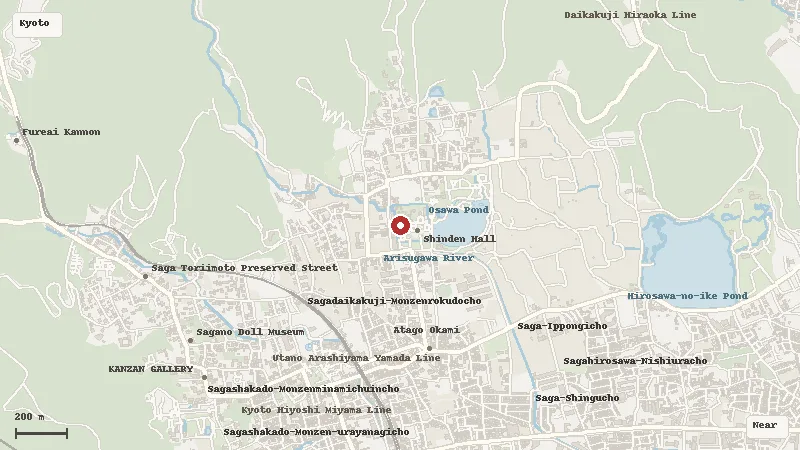
Map data © OpenStreetMap contributors