
Why go
An architectural walk for travelers interested in Kanazawa's teahouse and entertainment heritage.
Field Notes
A chaya in this district was a venue for trained entertainers, with music, dance and formal hospitality for guests. The term therefore means more here than an ordinary café serving tea. In 1820 Kanazawa’s scattered entertainment houses were concentrated into designated districts, of which Higashi became the largest. That organisation produced a streetscape with a shared function as well as a shared appearance.
The architecture makes that purpose visible. Fine first-floor latticework, called kimusuko, screens the frontage, while reception rooms occupied the upper storey. The tourism association notes that chaya were an exception to restrictions on two-storey buildings in the Edo-period town. When walking through, compare the rhythm of the lattices with the broad upper façades. Their proportions reflect spaces for hospitality and performance; present-day shops, cafés and visitor-open houses represent different later uses of that inherited building type.
Planning Notes
Suggested time on site: 45–90 minutes. Keep travel and waiting time separate from that estimate.
Timing noted for this stop: Daytime; verify current operating hours before travel.
Access reference: Kanazawa Station + bus. Check the final walking or connecting leg when choosing your route.
Location
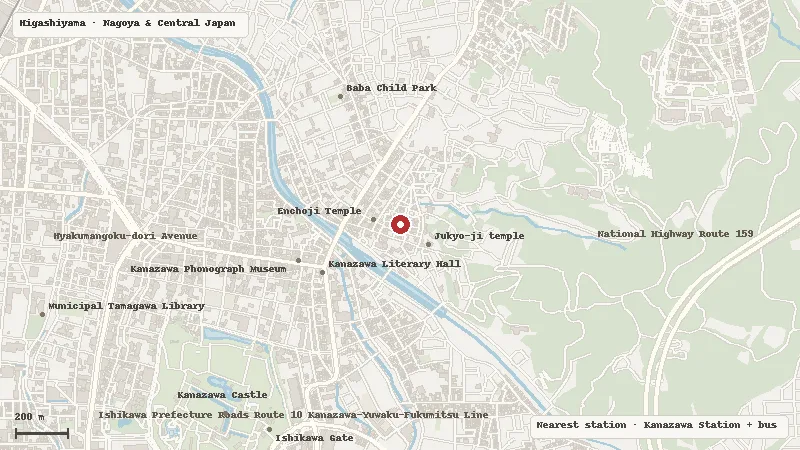
Map data © OpenStreetMap contributors