
Why go
A useful stop for travelers interested in cooking ingredients and food retail as well as a market meal.
Field Notes
Tsukiji’s name means constructed land. The district was reclaimed after the Great Fire of Meireki in 1657, well before it became famous for fish. Namiyoke Inari Shrine, whose name refers to protection from waves, preserves a connection with that watery origin at the edge of the market district. The later transformation followed the 1923 earthquake, which destroyed the Nihonbashi fish market; the new central wholesale market opened at Tsukiji in 1935.
The Outer Market’s present variety reflects its original professional customers. Ingredients sit alongside knives, tableware, packaging and work clothing because preparing and selling food requires more than fresh fish. The market association describes a gradual expansion of smaller retail portions and prepared dishes for ordinary visitors. When browsing, compare those ready-to-eat offerings with the specialist supplies. Both belong to the same commercial community, and the quieter ingredient and tool shops can explain its working character as clearly as a busy restaurant queue.
Planning Notes
Suggested time on site: 1.5–2.5 hours. Keep travel and waiting time separate from that estimate.
Timing noted for this stop: 09:00–14:00 for public shopping; many shops close on Sundays and some Wednesdays.
Access reference: Tsukijishijo Station / Tsukiji Station / Higashi-ginza Station. Check the final walking or connecting leg when choosing your route.
Location
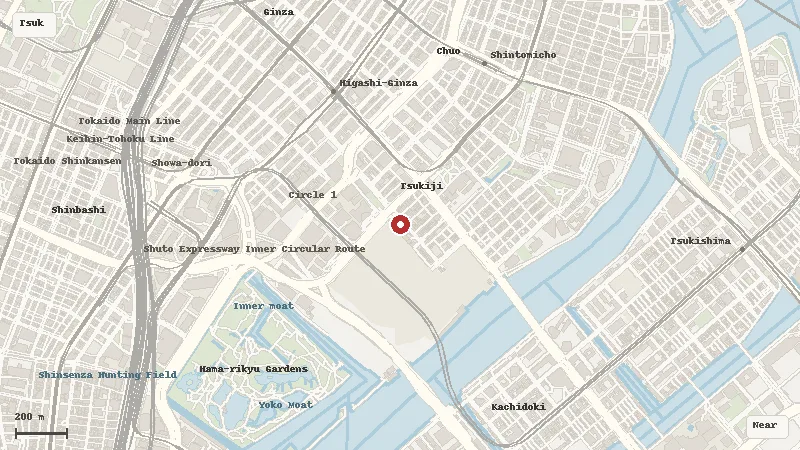
Map data © OpenStreetMap contributors