
Why go
Choose the Main Deck or book the separate Top Deck experience according to the operator's current terms; the two do not share every admission arrangement. The tower's modern lights-out lovers' story is a contemporary custom, not an ancient legend, and special illuminations can change the usual timing. Sunset offers a natural way to compare the structure and city views in daylight and at night.
Special Visit Instructions
Some places are easy to walk into. These are not. Follow the ticket, arrival, entry and venue-specific steps below before relying on this stop in a fixed itinerary.
Klook is another ticket option
Club planning tip: Klook currently lists a ticket product for this attraction. Compare Klook with the official seller for your exact date, ticket tier, cancellation terms and redemption method before paying. Availability and product rules can change, and any official timed-entry or identity requirements still control the visit.
Field Notes
Tokyo Tower’s familiar bands have a practical origin. The operator identifies the colours as international orange and white, chosen to meet aviation requirements. The pattern above the Main Deck changed from eleven divisions to seven in 1986, a small design detail that can help visitors read older photographs of the skyline. Repainting remains a substantial maintenance operation, carried out by hand with brushes rather than simply spraying the steelwork.
The two observation levels also preserve different chapters of the building’s use. The upper platform originally served antenna maintenance and became a public observatory in July 1967. Its conversion illustrates how a working broadcast structure developed into a sightseeing destination. Viewed with that history in mind, the tower is interesting both as an object in the city and as a place from which to look out over it. The steel lattice, high-level platforms and highly visible paint scheme all began with engineering needs that now contribute to its recognisable character.
Planning Notes
Suggested time on site: 1–2 hours. Keep travel and waiting time separate from that estimate.
Timing noted for this stop: Sunset–night for decks; outdoor stair ascent Sat/Sun/public holidays 09:00–16:00, subject to rain, severe weather and heatstroke warnings.
Access reference: Akabanebashi Station / Onarimon Station. Check the final walking or connecting leg when choosing your route.
Outdoor stair ascent operates on Saturdays, Sundays and public holidays, 09:00–16:00. Stair descent is separately available daily 09:00–20:00. Both close during rain, severe weather or heatstroke warnings. These are optional stair-route windows, not observation-deck hours.
Location
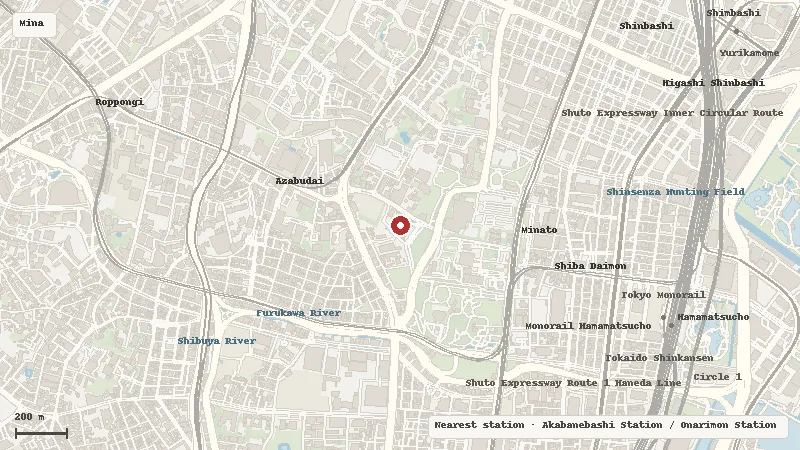
Map data © OpenStreetMap contributors