
Why go
The park rewards visitors who want to trace older city features within a landscape designed for modern public leisure.
Field Notes
At Hibiya Mitsuke, the rough stonework once belonged to a guarded approach to Edo Castle. When the park opened in 1903, a portion of the surrounding moat was retained as Shinji Pond. The combination of old masonry and designed water is therefore a deliberate adaptation of the castle landscape. It rewards a slower look than the flower beds alone might suggest.
Honda Seiroku designed the park after the site’s intervening use as an army parade ground. Western-style flower beds introduced a different kind of public leisure, while older features remained embedded in the plan. The crane fountain offers another visible layer: removed during wartime when its pond was filled, it was later reinstated. These survivals and restorations make Hibiya an evolving civic landscape. Let the currently accessible paths determine your circuit, since ongoing renewal can place individual features behind barriers.
Planning Notes
Suggested time on site: 1–1.5 hours. Keep travel and waiting time separate from that estimate.
Timing noted for this stop: Weekday morning or early evening.
Access reference: Kasumigaseki Station, about 2 minutes; Hibiya Station is also adjacent. Check the final walking or connecting leg when choosing your route.
Park grounds remain open, but regeneration work around the fountain and small music hall has introduced guard fencing and temporary inaccessible areas. Check current park notices before travel.
Location
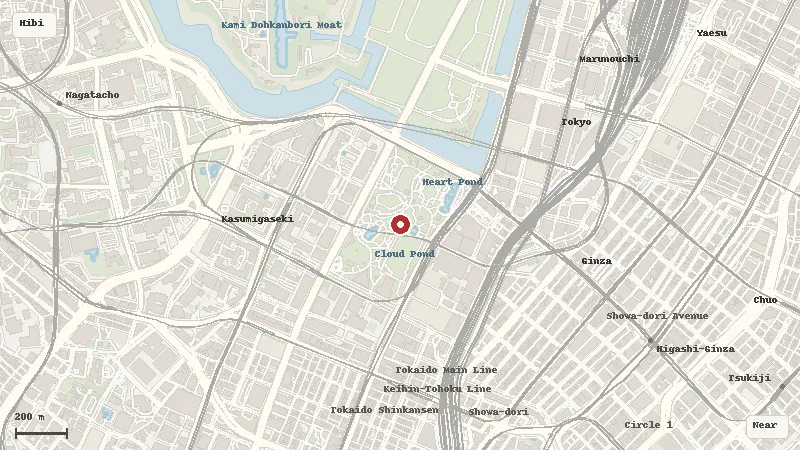
Map data © OpenStreetMap contributors