
Why go
The museum is especially useful for visitors interested in how products are manufactured and how engineering ideas move between industries.
Field Notes
The red-brick setting is part of the story being told. Sakichi Toyoda established an experimental loom plant here in 1911, and a spinning mill followed in 1914 to produce thread for testing. The administrative wing later hosted the establishment meetings of Toyoda Automatic Loom Works in 1926 and Toyota Motor in 1937. These are direct links between the surviving industrial site and the move from textile machinery into automobiles.
The complex continued changing purpose: wartime production included aircraft parts, followed by textile-machine components after the war. The museum opened in 1994, preserving a place where successive industries had occupied the same buildings. As you move between the pavilions, consider the factory itself alongside the displayed machines. Its changing uses make the connection between the two collections tangible, while the demonstrations show why manufacturing history depends on processes, movement and skilled work as well as finished products.
Planning Notes
Suggested time on site: 2–3 hours. Keep travel and waiting time separate from that estimate.
Timing noted for this stop: Opening hour on a weekday.
Access reference: Sako Station / Nagoya Station. Check the final walking or connecting leg when choosing your route.
Standard adult admission is ¥1,000. Regular hours are 09:30–17:00, last admission 16:30. The museum normally closes Mondays, or the following Tuesday when Monday is a public holiday. The 2026 calendar also marks December 26–31 closed. Check the dated operator calendar for holiday openings and temporary closures.
Location
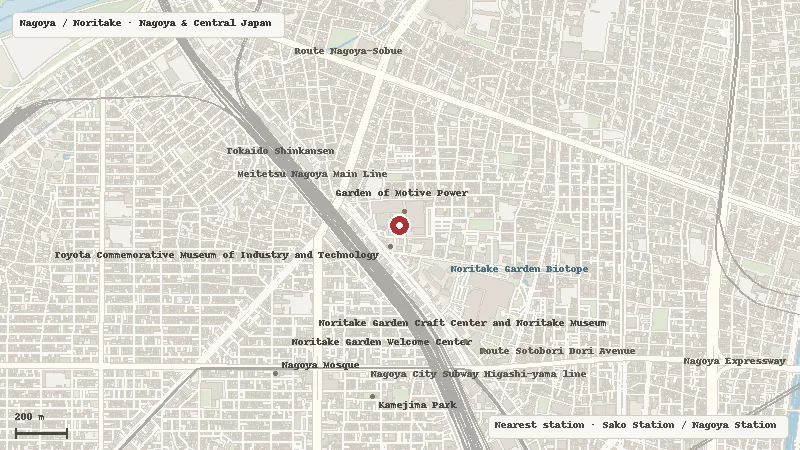
Map data © OpenStreetMap contributors