
Why go
The complex turns Aizu samurai history into a spatial experience rather than a display case. Moving through the reconstructed residence and surrounding buildings helps visitors understand household scale, status and everyday organization within the former domain.
Field Notes
Aizu Bukeyashiki is best approached as a museum of a lost samurai household. Aizu's support for the Tokugawa shogunate drew the domain into the Boshin War, and the destruction of the castle town included its warrior residences. The complex visitors explore today was completed in 1975 after the discovery of drawings encouraged a researched reconstruction of chief retainer Saigo Tanomo's home. That modern date is important to the experience: the rooms explain an earlier way of life through reconstruction and interpretation, while the wider site brings together several kinds of historical building.
The residence contains thirty-eight rooms, and the most revealing feature is their division by use. Areas for receiving the domain lord and senior officials differ from those used for work and security, family life, or servants. Rather than reading the house simply as a large private dwelling, follow how public duties entered domestic space. The reconstructed layout makes rank, service and household organisation visible in the relationship between rooms. Looking for these functional groups gives the walk a clearer purpose than counting rooms or decorative objects.
Other buildings extend the account beyond the chief retainer. The former Nakahata administrative office was relocated from present-day Yabuki and is recognised as a prefectural Important Cultural Property. A sericulture farmhouse moved from Fukushima provides another setting for exhibits about everyday life. Storehouse and longhouse spaces also accommodate historical displays. These differences are worth keeping in view: the complex combines a reconstructed elite residence with relocated structures and museum installations. Comparing their original functions offers a broader picture of Aizu and its region, including administration and rural work alongside the better-known story of samurai society.
A practical way to finish is with one of the craft activities, if it fits the day's programme. Akabeko painting introduces Aizu's familiar red-cow folk toy, traditionally associated with good fortune and protection from misfortune, while glass engraving offers a different hands-on souvenir. The museum also describes archery and exploration quizzes, with participation conditions and weather affecting some activities. Leave additional time for whichever option you choose instead of folding it into a brisk circuit of the buildings. For families, examining the household rooms first and making something afterwards can connect the historical displays with the region's continuing craft culture.
Planning Notes
Suggested time on site: 60–120 minutes. Keep travel and waiting time separate from that estimate.
Access reference: JR Aizu-Wakamatsu Station → city sightseeing bus to Aizu Bukeyashiki-mae. Check the final walking or connecting leg when choosing your route.
For akabeko painting or glass engraving, reception closes at 15:30, or 15:00 during winter. These activities take about 30–40 minutes and use same-day registration; groups and school trips should inquire in advance. Arriving in time for general last admission does not guarantee activity registration.
Location
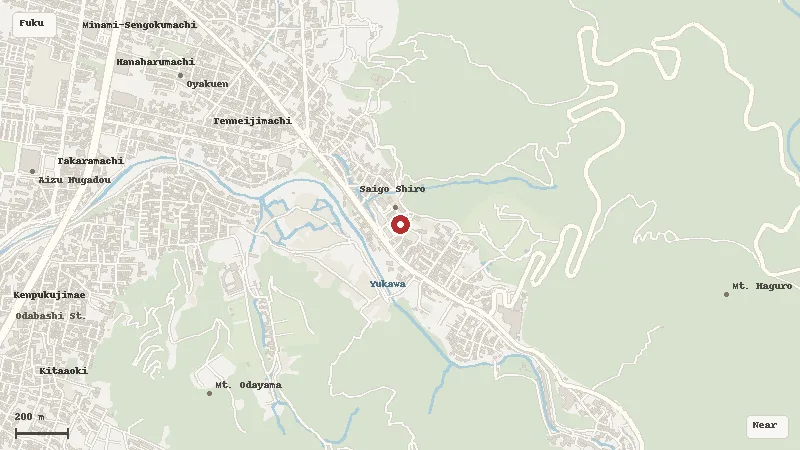
Map data © OpenStreetMap contributors