
Why go
The open grounds make the relationship between the modern capital and the former Edo Castle landscape easier to see.
Field Notes
The widely spaced black pines are a maintained landscape with a connection to Tokyo’s former shoreline. This part of the plaza was an inlet of Edo Bay before reclamation for the castle in 1593. Black pines would have grown along that coast; planting of the present grove began in 1888. Their sculptural shapes owe much to continuing pruning and care, so the apparent simplicity of the open ground is carefully produced.
At the famous bridge viewpoint, distinguish the stone bridge in front from the iron bridge behind it. Nijubashi properly refers to the latter. Its name recalls an Edo-period wooden bridge supported by an additional structure below, rather than simply meaning the two bridges now visible. The composition of stone bridge, formal gate and distant Fushimi watchtower is the classic palace view. Knowing those separate elements makes this a more rewarding stop even when the palace buildings themselves remain hidden behind trees.
Planning Notes
Suggested time on site: 1–2 hours. Keep travel and waiting time separate from that estimate.
Timing noted for this stop: Early morning or late afternoon.
Access reference: Nijubashimae Station or Hibiya Station; multiple entrances. Check the final walking or connecting leg when choosing your route.
Location
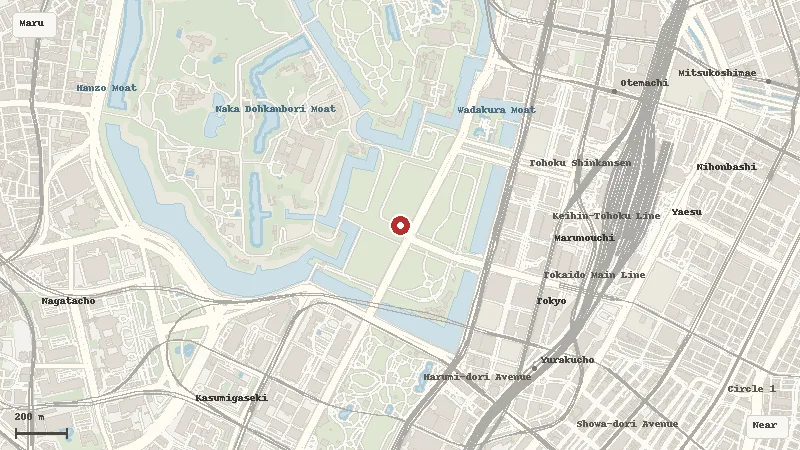
Map data © OpenStreetMap contributors