
Why go
The garden offers a composed landscape inside central Tokyo, but it is not an always-open municipal park. Its value is the contrast between carefully maintained traditional scenery and the surrounding city, with access shaped by the property’s restaurant, event and hospitality use.
Field Notes
Happo-en is best understood as a historic garden landscape that now operates inside a private hospitality property rather than as a municipal park. The Shirokanedai grounds have passed through several owners and uses, and the present-day visitor experience combines that older landscape with restaurants, ceremonies, weddings and other programmed activity. For an UMJ itinerary, that distinction matters: the garden is the reason to be interested in the property, but access should be planned around the venue’s current public programs or hospitality services instead of assuming unrestricted entry.
The operator’s history traces the site back to the early Edo period, when Okubo Hikozaemon is associated with the Shirokanedai property. By the late Meiji era, businessman Shibusawa Kisaku owned the grounds and cultivated a plum garden there. In the Taisho period, Kuhara Fusanosuke acquired the property and shaped much of the garden arrangement that later became associated with Happo-en. Those layers make the landscape older than the postwar business that now manages it.
Around 1950, Toshitsuka Hase began the restaurant phase of the property after persuading Kuhara to permit dining within the garden. The name Happo-en refers to the idea of views in every direction, linking the commercial identity to the landscape rather than replacing it. Later additions included a Western Hall for banquets and weddings and the use of the former Kuhara residence as Kochuan. The operator also preserves stories about individual trees connected with earlier owners, including a cornelian cherry identified as an older survivor of the garden’s long history.
A major renovation culminated in a September 2025 reopening. That means older photographs, restaurant layouts and event descriptions may no longer represent the current property exactly. The garden itself remains the connective element: pond scenery, mature planting and seasonal changes form the visual setting for the modern venue. Visitors interested primarily in the garden should therefore check the current Happo-en schedule before travelling, confirm whether the intended restaurant, event or public program provides access, and treat the landscape as part of an operating hospitality complex rather than as a free-standing public attraction.
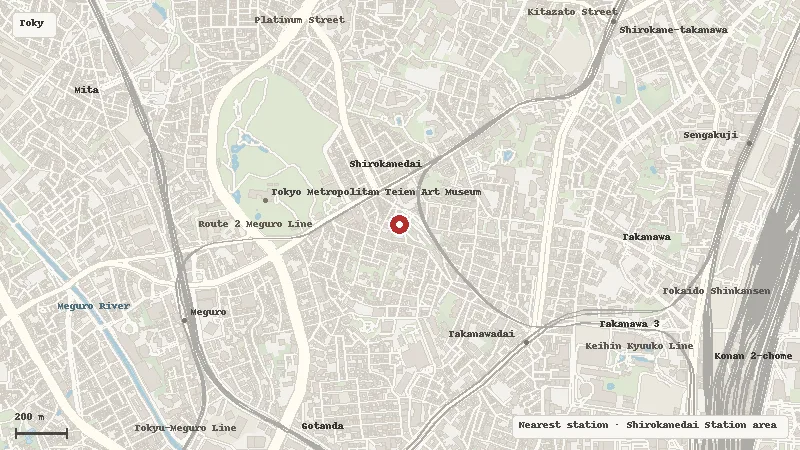
Shirokanedai Station provides the practical rail approach, but the final decision to enter should still be based on the property’s current visitor guidance rather than on proximity alone.
Planning Notes
Suggested time on site: 45–90 minutes. Keep travel and waiting time separate from that estimate.
Access reference: Shirokanedai Station area. Check the final walking or connecting leg when choosing your route.
The operator’s garden-specific seasonal account identifies late March for cherry blossoms and May for fresh greenery and satsuki azaleas. These are usual seasonal cues, not guaranteed bloom dates. The garden is a strolling garden; weddings, dining and tea-room use are separate activities. The published telephone-contact window does not establish unrestricted garden access or a special-event timetable.
Location
Map data © OpenStreetMap contributors