
Why go
Useful as a precise photo stop within Dotonbori, rather than a separate district-length outing.
Field Notes
The runner began as a symbol of health before it became a canal-side landmark. Glico says founder Riichi Ezaki was looking for an image to express the purpose of his nutritional confectionery when he saw children racing towards a finish. Their raised-arms celebration inspired the company’s goal-in mark. Recognising that origin gives the familiar pose a meaning beyond a souvenir photograph.
The Dotonbori sign first appeared in 1935. What visitors see today is its sixth generation, installed in October 2014, with a later update to the Glico lettering in 2022. The structure is about twenty metres high and uses roughly 140,000 LED chips. Its long continuity is therefore continuity of an image rather than one unaltered piece of equipment. Looking from the bridge, the combination of a familiar twentieth-century advertising figure and modern display technology neatly illustrates how Dotonbori keeps renewing its commercial spectacle while retaining recognisable symbols.
Planning Notes
Suggested time on site: 15–30 minutes. Keep travel and waiting time separate from that estimate.
Timing noted for this stop: After sunset for illumination, normally until midnight; lighting may end earlier.
Access reference: Namba Station / Osaka-Namba Station - walk to Ebisu Bridge. Check the final walking or connecting leg when choosing your route.
Location
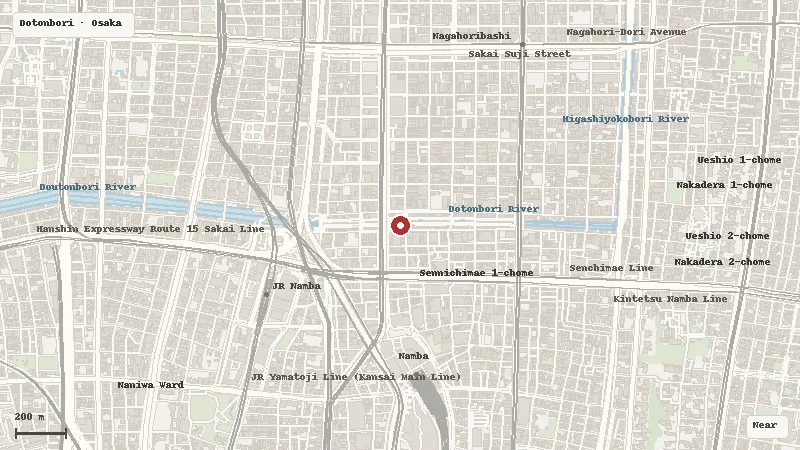
Map data © OpenStreetMap contributors