
Why go
The interiors turn a recognizable city landmark into an introduction to Sapporo's early educational and civic history.
Field Notes
The building began in 1878 as the Agricultural College’s drill hall, with a broader educational role than its military-sounding name suggests. Laboratories, lecture rooms and natural-history specimens occupied the ground floor, while the upper hall hosted physical training and ceremonies. William Wheeler planned it after succeeding William S. Clark at the college, linking the building with the foreign educators involved in early Sapporo’s development.
The clock arrived later. Manufactured by the E. Howard company in Boston, it was installed as part of an addition completed in 1881. The familiar landmark therefore combines a college hall with an imported timekeeping mechanism, rather than having been conceived simply as a city clock tower. Looking at the two floors and the clock displays with that sequence in mind makes the modest wooden structure a useful record of education, technology and civic ambition in the new Hokkaido capital.
Planning Notes
Suggested time on site: 45–90 minutes. Keep travel and waiting time separate from that estimate.
Timing noted for this stop: Daytime; verify current operating hours before travel.
Access reference: Odori / Sapporo Station. Check the final walking or connecting leg when choosing your route.
Location
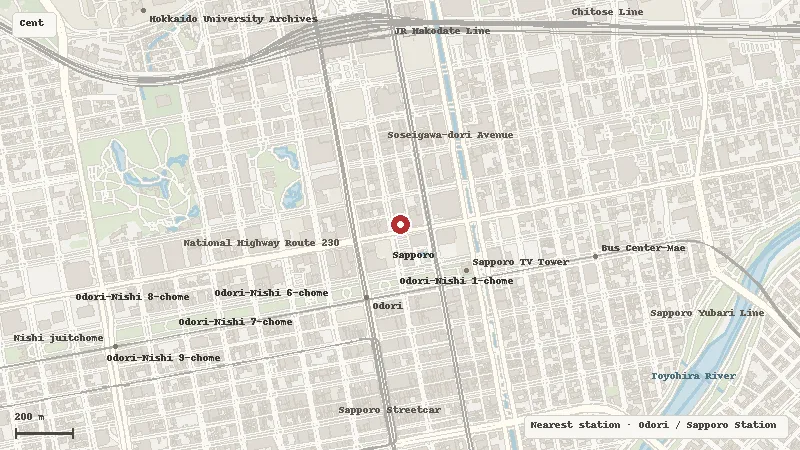
Map data © OpenStreetMap contributors