
Why go
The garden rewards visitors who enjoy tracing how a designed landscape changes as they move through it.
Field Notes
Try reading the names on the garden map as clues to the scenes around you. Togetsukyo is formed from two large stone slabs, but its name also recalls a waka poem combining a moving moon with a crane’s cry from a rice field. The bridge links the physical view to an imagined sound and time of day. Sasakani-no-michi offers a smaller-scale example: its old word for spider suits a path likened to a thin thread of web.
Look across the pond for the paired hills on Naka-no-shima. Their names, Imo-yama and Se-yama, use old words for woman and man, and the garden authority associates them with the creation deities Izanami and Izanagi. These are designed allusions, not claims that mythical events happened here. Following a few such references gives the walk a more individual focus than simply seeking the largest tree or the broadest pond photograph.
Planning Notes
Suggested time on site: 1.5–2 hours. Keep travel and waiting time separate from that estimate.
Timing noted for this stop: Opening hour; spring weeping cherry and autumn foliage.
Access reference: Komagome Station; about 7 minutes on foot. Check the final walking or connecting leg when choosing your route.
Location
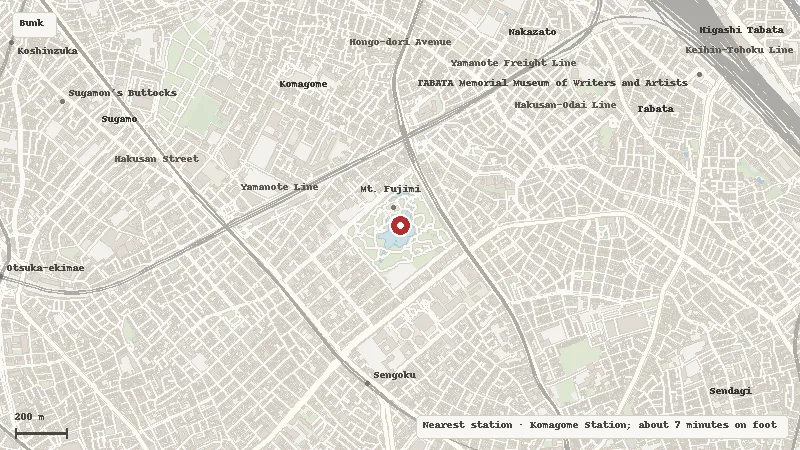
Map data © OpenStreetMap contributors