
Why go
The museum provides regional context within a broader modern-art collection, making it useful for seeing how Hokkaido artists fit into wider Japanese artistic developments. Changing exhibitions add another layer beyond the permanent collection focus.
Field Notes
The Hokkaido Museum of Modern Art opened in Sapporo in 1977 as a prefectural institution for collecting, researching and exhibiting modern and contemporary art. Its role has always been broader than presenting a single regional school. The museum brings artists connected with Hokkaido into conversation with modern Japanese art, international movements, glass and contemporary practice, giving the island’s art history a wider frame.
One major collection priority is work related to Hokkaido. Painters and sculptors associated with the island can be studied through local cultural and environmental contexts without being isolated from developments elsewhere in Japan. A second collection field covers modern Japanese art more broadly, allowing regional material to be compared with national trends. The museum also holds École de Paris and related Western art, reflecting the strong impact that early-twentieth-century Paris had on Japanese artists and collectors.
Glass is another distinctive strength. The museum has developed substantial holdings in modern decorative and studio glass, giving the medium unusual prominence within an institution that also collects painting, sculpture and contemporary art. By 2024 the museum reported more than six thousand works overall. Only a fraction can be shown at once, which means collection exhibitions rotate and repeat visits can produce very different experiences.
The museum also carries normal research, conservation and storage responsibilities. Exhibition changes and temporary closures are part of caring for a large collection rather than evidence that the institution has one permanent display that visitors are guaranteed to see. Temporary exhibitions further reshape the route during the year.
For an UMJ itinerary, the museum is most useful when approached through its collecting policy: Hokkaido art is central, but the point is to compare it with national and international modernism rather than to treat the island as culturally separate. Nishi 18-chome Station is the practical rail approach. Visitors should check the current exhibition calendar and Monday/holiday closure pattern before travel and allow enough time to see both collection and special exhibitions if they are running. The museum’s significance comes from how it constructs a modern art history for Hokkaido while keeping that history connected to larger artistic movements.
Planning Notes
Suggested time on site: 60–120 minutes. Keep travel and waiting time separate from that estimate.
Access reference: Nishi 18-chome Station. Check the final walking or connecting leg when choosing your route.
Open 09:30–17:00, last entry 16:30. In the October 5–December 27, 2026 window, the official calendar closes October 5, 13, 19, 26; November 9, 16, 24, 30; December 7, 14 and every day December 21–27. October 12, November 2 and November 23 are open. The booking link is for the separately ticketed MINIATURE LIFE 2 exhibition (September 12–November 8), not the ordinary collection.
Location
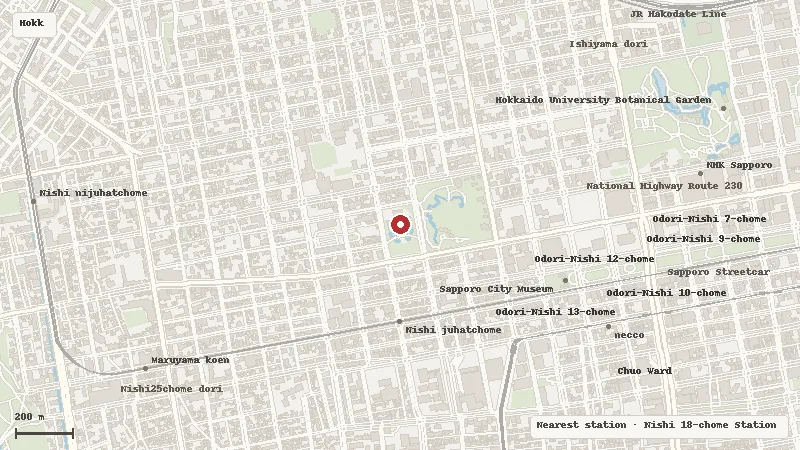
Map data © OpenStreetMap contributors