
Why go
Visit for the outdoor bathing landscape rather than only the hot-spring water itself. The rotenburo sit directly beside the river among large rocks and greenery, creating a setting that feels inseparable from the valley; bus or shuttle access runs from Minakami and Jomo-Kogen areas.
Field Notes
Takaragawa Onsen Osenkaku is arranged around its river setting, with several outdoor baths offering different positions along the water. The inn's bath guide distinguishes Maka, Hannya and Kodakara as mixed bathing areas, with Maya reserved for women. Maka dates to 1940 and was renovated in 2004; Maya was established in 1970 in response to requests for a women's outdoor bath. Kodakara occupies the opposite bank from Hannya and is the largest of the named outdoor pools described by the inn. These differences make the bath names useful when orienting yourself, rather than treating every photograph of the riverside pools as the same location. Seasonal foliage forms part of the setting, particularly around Maka, but the river itself is not a swimming area. The operator explicitly warns that its water level can change suddenly. Stay within the designated bathing facilities and follow current staff instructions about access, cleaning and bathing arrangements.
The modern inn grew from a much less accessible mountain retreat. Its published history describes lodging developing during the Taisho era, when reaching the area was difficult and forestry transport played an important role. Later dam construction brought roads and electricity, and a major building project produced the main hall in 1955. This sequence helps explain the combination of a secluded valley atmosphere and a substantial established accommodation business. The inn also preserves an origin legend in which Yamato Takeru, ill during an eastern journey, followed the appearance of a hawk to a hot spring and recovered after bathing. Treat this as local storytelling associated with the spring, not a documented medical outcome or a precise founding record. The historical account itself acknowledges uncertainty about when use of the spring began. Keeping the legend and the modern development story separate makes both more understandable: one explains a remembered sacred association, while the other describes how visitors came to stay here.
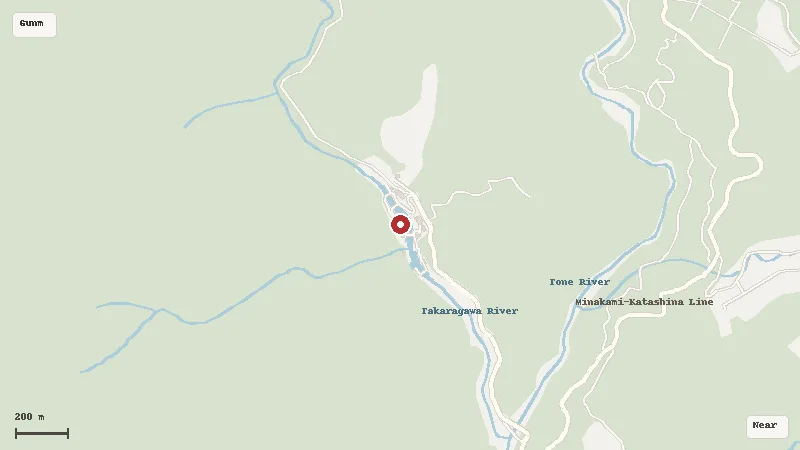
When arranging a visit, distinguish an overnight stay at Osenkaku from the separate day-bathing option linked on its official site. A photograph of a large outdoor bath does not establish which services are included in a particular booking. Check the current bathing notices alongside your chosen plan, especially for mixed-bath arrangements and clothing requirements. Use the inn's own access information for the final approach to Fujiwara in Minakami, since the riverside setting is outside a city-center hotel district.
Planning Notes
Suggested time on site: 45–120 minutes. Keep travel and waiting time separate from that estimate.
Access reference: JR Minakami or Jomo-Kogen Station → bus/shuttle toward Takaragawa Onsen. Check the final walking or connecting leg when choosing your route.
Day-use bathing at Takaragawa Sanso is 10:00–16:30, with final reception at 16:00. The operator recommends arriving by about 15:00 and limits day-use to four hours. Day-use visitors do not have a pickup service. The supplied Takaragawa bathing garment is included; visitors may not substitute their own.
Location
Map data © OpenStreetMap contributors