
Why go
The museum was designed around works that occupy their own spaces rather than around a neutral sequence of galleries. That approach continues outside the building, so the visit is strongest when the art center and the surrounding public-art district are read together.
Field Notes
Towada Art Center opened in 2008 as the central institution of Arts Towada, a city project intended to reactivate Kanchogai Avenue in central Towada. The initiative responded to changes in the city center, including population decline, administrative restructuring and vacant properties. Rather than treating the absence of a museum as the only problem, Arts Towada used contemporary art and architecture as tools for rebuilding activity along an existing civic boulevard.
Architect Ryue Nishizawa designed the museum as a group of separate white volumes linked by transparent corridors. Each gallery can read almost like an individual small building rather than one room inside a giant box. Glass openings connect interior works with the street, and outdoor spaces occupy the gaps between volumes. The architecture therefore supports the broader urban concept: the museum should remain visually and physically connected to the city around it.
Its core permanent works were commissioned with this particular building and urban setting in mind. The museum describes dozens of works by Japanese and international artists, including figures such as Yayoi Kusama, Yoko Ono, Ron Mueck and Choi Jeong Hwa. Many pieces were designed for particular rooms or sightlines, which means the collection cannot be understood only as movable objects detached from the building. Space, scale and urban context are part of the work.
Arts Towada extends beyond the ticketed galleries. Large outdoor pieces in Art Square and along Kanchogai Avenue can be encountered as part of an ordinary city walk, blurring the boundary between museum admission and public space. A complete visit therefore works best when indoor galleries and the surrounding boulevard are treated as one cultural district with different access rules.
The museum’s significance is contemporary rather than dependent on age. Its 2008 opening marked a deliberate strategy to use art as urban infrastructure in a changing regional city. Temporary exhibitions, collection rotations and announced renovation closures can substantially alter the visit, while outdoor works may remain accessible when galleries are not. Visitors should check the current museum calendar, especially around the major renovation period announced for 2027–28. Towada is most informative when the building, commissioned collection and public art are read together as one long-term city project.
Planning Notes
Suggested time on site: 90–150 minutes. Keep travel and waiting time separate from that estimate.
Access reference: Kanchogaidori bus stop; buses from Hachinohe or Shichinohe-Towada. Check the final walking or connecting leg when choosing your route.
The Tsubaki Noboru: FREEDOM exhibition runs June 6–November 8, 2026, with last admission at 16:30. Ordinary Monday and holiday-substitution closures remain applicable, as does the already-recorded October 24 temporary closure. The exhibition end is not a whole-museum closure. Tickets are available at the museum on the visit day.
Location
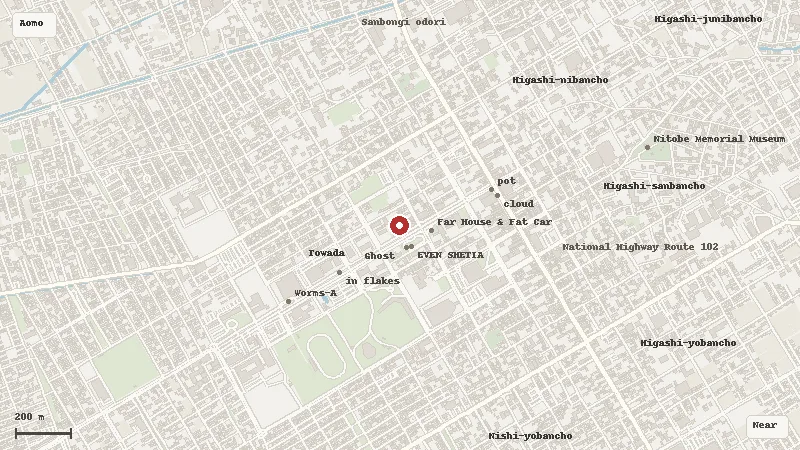
Map data © OpenStreetMap contributors