
Why go
The setting is as important as the shopping: stalls unfold along a working wharf rather than inside a purpose-built market hall. Early-day food, seafood and produce make it a direct way to experience Hachinohe's port culture at street level.
Field Notes
Tatehana Wharf Morning Market transforms a working waterfront in Hachinohe into a temporary commercial street before much of the city is fully awake. On scheduled market mornings, stalls stretch for roughly eight hundred metres along the wharf. Seafood reflects Hachinohe’s fishing-port identity, but the range is much broader: vegetables, fruit, flowers, bread, coffee, noodles, sweets, tools and everyday goods appear alongside prepared breakfast food. The market functions as a social gathering place for local residents as much as a visitor attraction.
The current organizer describes roughly three hundred vendors during the normal season. Trading begins around dawn and winds down early, so the market is not an all-day destination. Arriving after a normal hotel breakfast can mean missing much of the activity. The seasonal calendar also matters: the regular Sunday pattern runs through much of the year, but special dates, winter gaps and other exceptions are published separately. Older English-language schedules should not be treated as permanent.
The Minato Sunday Morning Market cooperative was established in 2010 to organize vendors and support the market’s operation. That date refers to the present cooperative structure, not necessarily to the first time people ever sold goods at the wharf. The cooperative model explains why the market is diverse: it is a collection of independent sellers rather than a single food hall with centralized products and prices.
A vendor directory divides the wharf into rows and numbered positions, making it possible to locate particular stalls or product types. Seafood and processed fish share space with produce, seedlings, flowers, baked goods and household items. That mix is important because it shows the market serving routine local needs in addition to tourism.
Mutsu-Minato Station is the nearest rail reference, but Tatehana should not be confused with the separate markets around the station itself. A successful visit starts early, uses the current date calendar and treats prepared food as part of a broader working market. The appeal comes from the temporary concentration of vendors, customers and breakfast activity on a normally open industrial waterfront, not from a permanent shopping complex that can be visited at any hour.
Planning Notes
Suggested time on site: About 1 hour for a slow circuit of the whole market; allow extra time for food and queues. Keep travel and waiting time separate from that estimate.
Access reference: JR Mutsu-Minato Station; about 10 minutes on foot. Check the final walking or connecting leg when choosing your route.
Visit Hachinohe recommends about one hour for a slow walk around the whole market, with additional time needed for eating and queues. The organizer’s current calendar lists October 11, 18 and 25, 2026, 04:00–08:30. This is a market-event schedule, not the waterfront’s access hours. Use the current operator calendar rather than the older tourism page’s special dates or transport examples.
Location
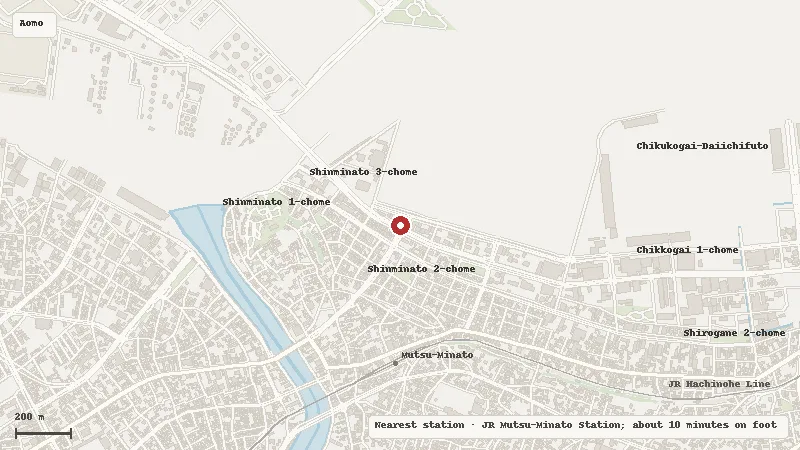
Map data © OpenStreetMap contributors