
Why go
Give the central statue time beyond a quick look: its construction draws on Okinawan lacquer craft, while the surrounding art extends the theme of peace. Keep the hall, the prefectural museum and the wider park distinct when checking admission and opening information. A quiet visit can complement the broader historical context presented elsewhere at Mabuni.
Field Notes
The central peace image can be considered alongside the artworks surrounding it. Yamada Shinzan devoted more than eighteen years to creating its model, with community fundraising supporting the project. On the hall walls, Nishimura Keiyu’s series War and Peace develops the same subject through painting, while the associated art spaces contain donated works from artists who supported the hall’s purpose.
A visit can therefore move from the scale of the central figure to the different ways artists expressed remembrance and hope. Give individual works time rather than treating the hall as a single object to check off between other memorial sites. The park’s guide identifies the hall as its own institution within the wider Mabuni memorial landscape. Confirm its particular opening arrangements if you want to enter, rather than assuming the open park and every building share the same timetable.
Planning Notes
Suggested time on site: 45–75 minutes. Keep travel and waiting time separate from that estimate.
Timing noted for this stop: Morning before the wider memorial park becomes busy.
Access reference: Bus/car to Okinawa Peace Memorial Park; the hall is inside the park grounds. Check the final walking or connecting leg when choosing your route.
Location
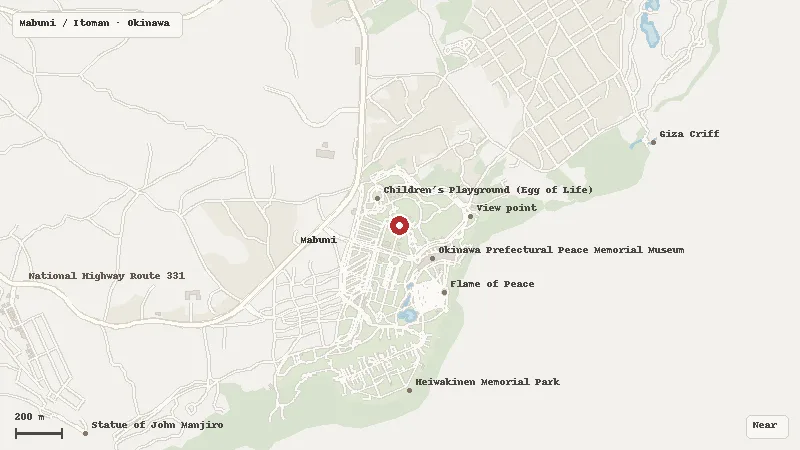
Map data © OpenStreetMap contributors