
Why go
The museum gives structure to a battlefield that is otherwise spread across fields, roads and monuments. Starting here provides context for the commanders, movements and consequences of Sekigahara before visiting the surrounding positions on the ground.
Field Notes
Sekigahara becomes easier to understand when a visitor can connect a name on a battle diagram with a place in the surrounding town. This museum occupies the site of Tokugawa Ieyasu's final headquarters and interprets the confrontation of 1600, when the balance of power shifted toward the Tokugawa. Its own introduction makes a useful historical distinction: the familiar labels Eastern Army and Western Army were not the names used at the time. Maps, formation diagrams and objects associated with the battle give substance to the competing coalitions. For a first visit, concentrate on where the commanders stood and how their positions related to each other; that provides a practical framework for exploring the historic sites afterward.
The exhibition route changes scale as it moves through the building. A floor-mounted Ground Vision presentation establishes the wider action, followed by an immersive theater using sound, light, wind and vibration. Upstairs, the collection considers both the battle itself and the ways people have retold it since the Edo period. The history of preserving the battlefield is another subject, which encourages a thoughtful distinction between an event, its later images and its modern memorials. The fifth-floor observation room then opens the view in every direction across present-day Sekigahara. Look back at the terrain after the displays: comparing a diagram with the actual horizon is one of the most rewarding parts of the visit.
Outdoor routes can turn that orientation into a more focused excursion. The museum's walking itineraries follow individual commanders, including Ieyasu's first and final headquarters, Ishida Mitsunari's position at Mount Sasao, and Otani Yoshitsugu's encampment and grave. Choosing one thread is a useful alternative to rushing between every marker. The official route collection also distinguishes short battlefield cycling from substantially longer regional rides, so a bicycle outing deserves its own time allowance. Historical-site guides and cycling information are coordinated through the sightseeing corner. The museum began welcoming the public on October 22, 2020, adding this modern point of orientation to a landscape whose meaning is distributed across many separate stops.
The immersive film uses loud sound, flashing light and vibration, which may be uncomfortable for some visitors. Consult the museum's theater precautions before choosing that part of the experience; the historical galleries and panoramic viewpoint offer other ways to explore the subject.
Planning Notes
Suggested time on site: 90–150 minutes. Keep travel and waiting time separate from that estimate.
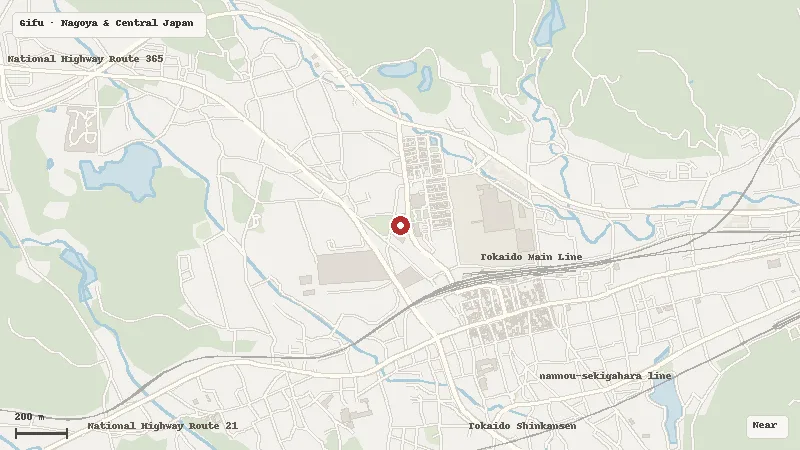
Access reference: JR Sekigahara Station; walk/taxi within the battlefield area. Check the final walking or connecting leg when choosing your route.
Hours/access: 09:30–17:00; last museum entry 16:30. Normally closed Mondays, shifting to the next weekday after a holiday; November 2, 2026 is specially open. October 12 and November 23 are open, with closures October 13 and November 24. Closed Dec. 29–Jan. 3.
Adult admission is ¥1,000 during October 6–November 23, 2026, rather than the ordinary ¥500. First-floor Ground Vision/theater reservations are recommended for a guaranteed seat; the final movie starts at 15:45 and the experience takes about 25 minutes. General museum entry and movie times are different. The booking link reserves the first-floor Ground Vision/theater only. Reserve by the previous day; same-day reservations and changes are unavailable. Remaining seats may be distributed onsite.
Location
Map data © OpenStreetMap contributors