
Why go
The main reason to visit is its connection to Kōbō Daishi rather than generic temple scenery. That birthplace tradition gives Zentsu-ji a central place in Shingon history, while a 30–75 minute planning range allows time for the working precinct without assuming every hall keeps the same access schedule.
Field Notes
Zentsuji makes more sense when you visit both sides of its extensive precinct. The eastern area, called the Garan, contains the main hall and five-story pagoda; the western Tanjoin centers on the Miedo and the birthplace tradition of Kukai, also known as Kobo Daishi. The temple identifies itself as number seventy-five on the Shikoku pilgrimage and as the head temple of the Zentsuji branch of Shingon Buddhism. Its name also reflects a family connection: the temple's historical account links Zentsuji to the name of Kukai's father. That account, transmitted in an Edo-period text, describes construction beginning in 807 and completion in 813 after Kukai returned from China. The eastern and western institutions later operated separately before being united in the Meiji period. Knowing this helps explain why the grounds contain two distinct centers rather than a single hall surrounded by secondary buildings.
In the east, the temple traces the layout to a model associated with Qinglong Temple in Chang'an, where Kukai studied. The buildings seen today should not be mistaken for an intact survival from that founding period: fire during warfare destroyed the early complex in 1558, and rebuilding followed with support from regional rulers and other patrons. In the west, the Miedo occupies the area associated with the Saeki family residence. The temple's tradition places Kukai's mother's room beneath the present inner sanctuary. The dark passage used for kaidan meguri runs below that sacred focus and is presented as a practice of inward reflection. Visitors considering it should understand its deliberately dark character before choosing the experience. The western area also connects with the birth-bathing well and the treasure collection, giving a different emphasis from the monumental halls in the east. Allowing time for both precincts brings together architecture, pilgrimage and the temple's account of Kukai's beginnings.
The broad grounds and the paid interior experiences should be planned separately. The temple's visitor information distinguishes ordinary precinct access from the combined kaidan and treasure-hall admission, with separate opening and last-entry details for those facilities. Decide whether your main interest is an outdoor pilgrimage stop or the more involved indoor experience before setting the length of the visit. Check for exceptional closures if entering those facilities is essential to your day.
Planning Notes
Suggested time on site: 30–75 minutes. Keep travel and waiting time separate from that estimate.
Access reference: JR Zentsuji Station; walk or short taxi onward to the temple precinct. Check the final walking or connecting leg when choosing your route.
Booking link: the temple-run Iroha Kaikan overnight lodging application, not ordinary temple admission. Submitting a request does not confirm accommodation; the temple confirmation email establishes the reservation.
Dated interior exceptions: on October 9, 2026, kaidan-meguri and the treasure hall close at 12:00 while Miedo and nokyosho operate normally; lodging and the cafe are closed all day. On October 20–21, 2026, kaidan-meguri and the treasure hall suspend entry 11:00–15:00. These are not whole-temple closures.
Location
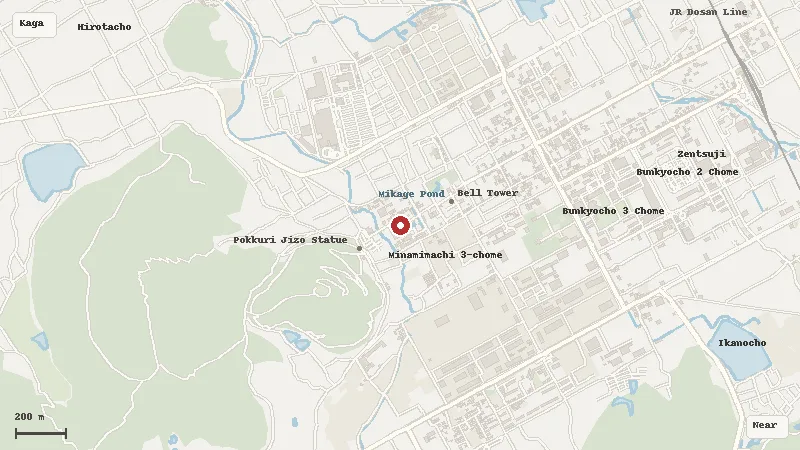
Map data © OpenStreetMap contributors