
Why go
The approach is as important as the shrine precinct itself. Passing through repeated vermilion gates while climbing above Tsuwano creates a strong sense of progression, and the elevated setting connects the sacred site visually with the castle town below.
Field Notes
Taikodani Inari rises above Tsuwano on the castle hill, with an approach that is as memorable as the shrine buildings. Roughly a thousand vermilion torii form a corridor up the slope; the shrine's own guide counts 263 stone steps. Take the ascent as part of the visit, allowing pauses instead of treating the gates only as a backdrop for a photograph. The repeated frames lead gradually away from the town, and the upper precinct opens a view back across Tsuwano's streets.
The shrine began in 1773 when Kamei Norisada, the seventh lord of the Tsuwano domain, invited the deity from Kyoto's Fushimi Inari. Its stated purpose was the protection of the castle and the peace of the domain's people. Shimane's tourism authority identifies the enshrined deities as Uga-no-Mitama and Izanami. This is a useful context for the hillside setting: the shrine developed in relation to the castle community, even though a modern visit often starts with the striking appearance of its red gates.
The Japan Travel Bureau Foundation records that worship was originally reserved for the domain lord and widened after the return of domain lands to the emperor. Its guide also describes a local four-stop worship practice. The stations are Motomiya, Myobusha, Shinden and the worship place behind the main sanctuary, with fried tofu offered at each. A visitor interested in religious practice can look for these distinct places rather than finishing at the first large hall. Follow the shrine's own signs and worship guidance when taking part.
There is more to the upper precinct than the end of the staircase. The institutional guide lists a treasure hall, library and tea-room building among its facilities, though their presence does not imply that every interior is open during an ordinary visit. For a straightforward outing, focus on the approach, worship areas and town outlook. Those arriving on foot should also allow for the journey from Tsuwano Station, which the prefectural guide estimates at around thirty minutes to the shrine.
Folklore & legends
Shimane's tourism guide recounts a man recovering an important lost key after praying here for seven days. The story helps explain the unusual spelling 稲成, which evokes wishes being accomplished. It is a tradition about the shrine's reputation for answered prayers, rather than a promise that a visitor's request will be fulfilled.
Planning Notes
Suggested time on site: 45–90 minutes. Keep travel and waiting time separate from that estimate.
Access reference: JR Tsuwano Station; about 15 minutes to the approach plus uphill walk. Check the final walking or connecting leg when choosing your route.
For the optional vehicle-blessing service specifically, the shrine publishes reception 09:00–16:00. Festival days have separate reception and performance arrangements, so confirm by phone (0856-72-0219) if that service is your purpose. This window is not a closure rule for general shrine worship.
Location
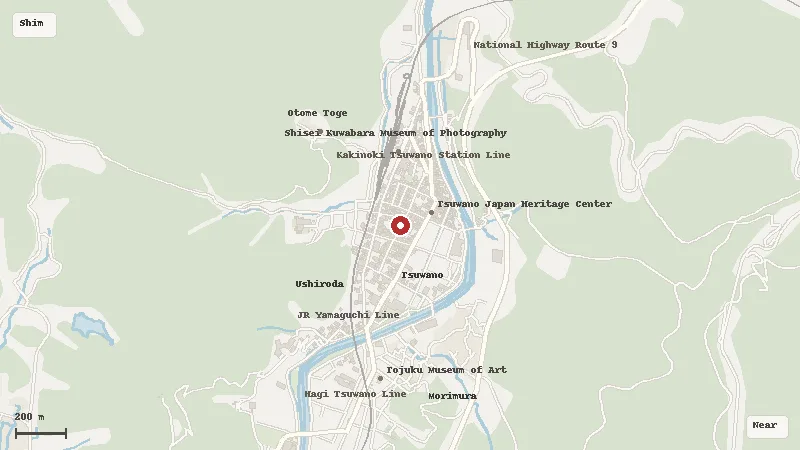
Map data © OpenStreetMap contributors