
Why go
The shrine gives useful context for understanding Tenmangu worship before encountering its better-known branches elsewhere in Japan. Its connection to Michizane places scholarship, memory and religious devotion within a site closely associated with the tradition's early spread.
Field Notes
Hofu Tenmangu is dedicated to Sugawara no Michizane, the scholar and statesman whose posthumous transformation into the deity Tenjin became one of Japan’s most influential religious cults. The shrine dates its foundation to 904, shortly after Michizane died in Dazaifu. Its historical account emphasizes that he had stopped in Hofu while traveling west under exile, giving local residents a direct memory around which worship developed. Hofu Tenmangu presents itself as the earliest shrine established specifically for Tenjin devotion.
The visible precinct is the result of many later rebuildings. Fires and conflict damaged the sanctuary over the centuries, and a major fire in 1952 destroyed the main buildings. Reconstruction continued into the early 1960s. That chronology is important because the shrine’s religious tradition reaches back far earlier than most of its present architecture. A visitor is not seeing an untouched tenth-century complex, but a modern sanctuary sustaining a much older devotional institution.
The treasure collection helps bridge those periods. Among the best-known objects are the Matsuzaki Tenjin Engi illustrated scrolls dated to 1311 and designated as Important Cultural Property. Such works show how Michizane’s life, exile and divine reputation were visualized and transmitted centuries after his death. The collection places Hofu within a national tradition of Tenjin imagery while preserving the site’s specifically local connection with his journey through Yamaguchi.
The shrine remains active for worship, especially prayers connected with learning and examinations because of Michizane’s scholarly reputation. Festivals and regular rites continue alongside tourism. Visitors should keep the historical courtier and the sacred traditions around his spirit conceptually distinct: the exile and political career belong to recorded history, while miraculous signs and divine return belong to shrine belief. That distinction makes the site more informative, not less. Hofu Tenmangu demonstrates how a historical person became a religious figure through local memory, storytelling, art, ritual and repeated rebuilding over more than a millennium.
Folklore & legends
Shrine tradition says that after Michizane died in 903, an extraordinary light appeared over Katsumaura and a mysterious cloud gathered around Sakadareyama. Local people interpreted these signs as evidence that his spirit had returned to Hofu, the place where he had stopped on the way to Dazaifu, and established the shrine the following year. Another tradition dated to 1195 says water at the Sakadare spring changed into sake. These accounts are preserved as religious narratives explaining the sacred identity of the place; they should not be presented as independently verified historical or physical events.
Planning Notes
Suggested time on site: 45–90 minutes. Keep travel and waiting time separate from that estimate.
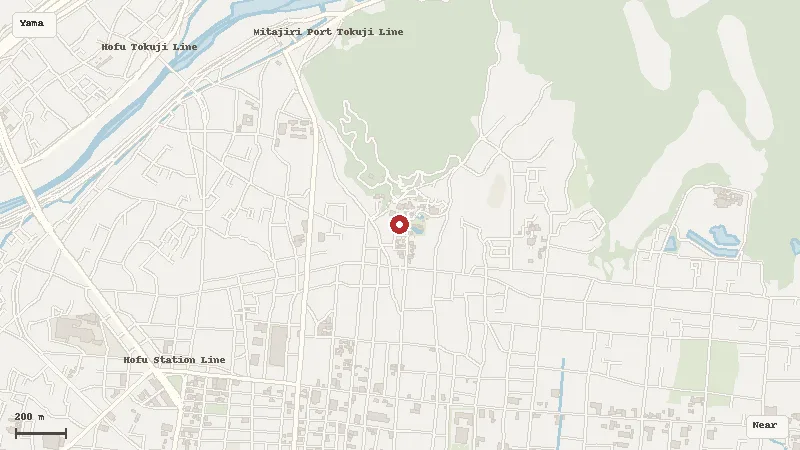
Access reference: JR Hofu Station → walk about 15 minutes or short bus. Check the final walking or connecting leg when choosing your route.
Tenjin Market is held on the approach below the main stone stairway 10:00–15:00 on the 25 th of each month except November; it is cancelled in rain. The shrine’s current calendar specifically lists October 25, 2026 at 10:00. This is a market-timing recommendation, not a change to shrine hours. Construction has changed the route between the plum-grove car park and main gate; follow the posted route. Parking near the car-purification area behind the guest hall is reserved for wheelchair or stroller users.
Location
Map data © OpenStreetMap contributors