
Why go
Asa Zoo is better suited to a dedicated half-day than a quick stop between central-city sights. The larger grounds and varied collection give families and animal-focused travelers room to spend time away from Hiroshima's denser museum and memorial circuit.
Field Notes
Hiroshima City Asa Zoological Park has grown through several generations of public recreation and animal interpretation. Construction began in 1968, and the zoo opened in September 1971. A western section followed in 1985 and an animal science building in 1987. These milestones help explain why the site offers more than one style of encounter: animal displays, educational spaces and later additions have developed over time. For visitors interested in the institution as well as its animals, the history is a useful reminder that a zoo is continually being reshaped rather than remaining fixed at its opening date.
One of Asa's most distinctive stories concerns the Japanese giant salamander. Research and breeding work began with the zoo itself, and the city records captive egg-laying in 1979 as a national first. The programme received the Koga Award in 1988, with later awards recognising work involving black rhinoceroses and Grant's zebras. This gives a visit an important focus beyond the largest or most immediately conspicuous animals. Seek out the interpretation of breeding and animal care: it explains why patient observation and knowledge accumulated over years are significant parts of the institution's work.
Changes in the visitor experience are also visible in the city's chronology. Volunteer animal interpretation began in 2003, followed in later years by the Leoglass lion exhibit and Giraffe Terrace. Pichiku Park had already opened in 2001 as another way to engage with animals. Rather than expecting every part of the zoo to look alike, notice the different viewing arrangements and the information they encourage you to consider. A route built around a few contrasting exhibits can be more memorable than trying to see every enclosure at the same speed.
The municipal visitor guide describes spacious green grounds with roughly 150 species, including elephants, giraffes, zebras, cheetahs, tapirs, red pandas, tigers and giant salamanders. That range makes it sensible to choose several priorities before starting. Food facilities, lockers and mobility-equipment services can help shape the day, but anyone depending on a particular loan item should confirm its availability rather than assume it will be waiting. Build breaks into the route and check the current park map on arrival. Families can combine familiar large mammals with one less familiar animal or research story, turning the visit into a more focused exploration of living diversity.
Planning Notes
Suggested time on site: 180–300 minutes. Keep travel and waiting time separate from that estimate.
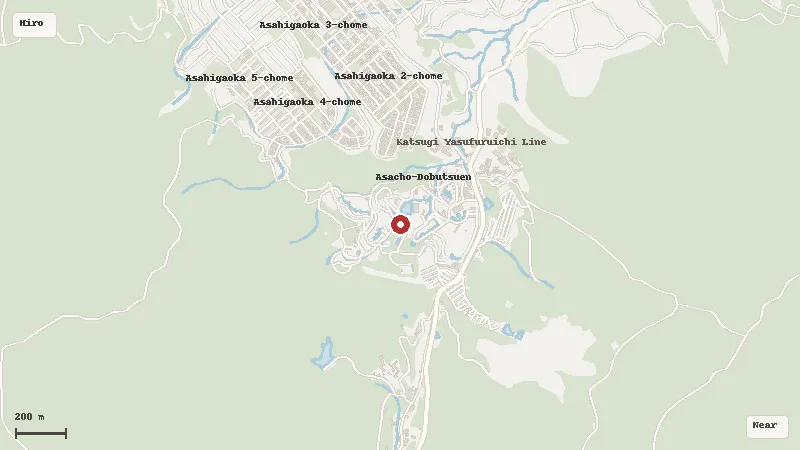
Access reference: Bus from Hiroshima Station; or bus connection from Kamiyasu Station. Check the final walking or connecting leg when choosing your route.
Location
Map data © OpenStreetMap contributors