
Why go
Its length makes Tenjinbashi-suji useful for browsing rather than checking off one attraction. Different sections have their own shops and food stops, and several stations let you enter or leave where convenient instead of walking the entire 2.6-kilometer route.
Field Notes
Tenjinbashi-suji turns a shopping walk into a cross-section of Osaka neighborhood life. Running north from Tenjinbashi toward the seventh chome, the street extends for roughly 2.6 kilometers. Osaka's tourism bureau describes a mixture of diners, prepared-food sellers, tea, cutlery, tofu, pottery and clothing shops. That range is more useful to a visitor than the temptation to walk the whole length simply because it is famous for being long. Choose a section, browse at an unhurried pace and allow a meal or a small purchase to give the walk a focus.
Its commercial past belongs to the river as well as the shrine. The merchants' history places the old Tenma produce market beside the Okawa, around today's Minami-Temma Park, and dates its establishment to 1653. Boats brought fresh products from surrounding provinces, while merchants handling dried goods gathered near the northern end of Tenjin Bridge. The association describes people coming to unload produce and then shopping along the street known as Jitchome-suji, the predecessor of today's shopping corridor. Keeping the riverside market distinct from the modern arcade makes that history easier to understand.
Osaka Tenmangu, dedicated to Sugawara no Michizane, provides the other important point of orientation. The tourism bureau explains that the district prospered as its shrine town during the Edo period and developed into the familiar shopping street in the Meiji era. The Tenjin Festival brings processions and festival activity through the area, connecting commerce with the shrine's calendar. For an ordinary visit, approaching the second-chome area with the shrine in mind gives the shops a historical setting rather than treating them as an isolated retail attraction.
The association also presents Tenma as a district of temples, writers and merchant-supported culture. Its historical account connects local prosperity to waterways and describes merchants helping sustain the Tenjin Festival. Those links offer a theme for a slower walk: look beyond purchases to the relationship between businesses and neighborhood institutions. The association's site provides separate shop maps for the second and third chome, useful when selecting a manageable area. Read those as section-specific guides, then choose your arrival point and route around the places that interest you instead of assuming a single itinerary fits the entire street.
Planning Notes
Suggested time on site: About 40 minutes for a through-walk; longer with shopping or meals. Keep travel and waiting time separate from that estimate.
Access reference: Minami-morimachi / Ogimachi / Tenjimbashisuji 6-chome stations depending on section. Check the final walking or connecting leg when choosing your route.
Duration scope: the tourism bureau gives about 40 minutes to walk the full street. This is a through-walk; shopping, meals and other stops need extra time.
Location
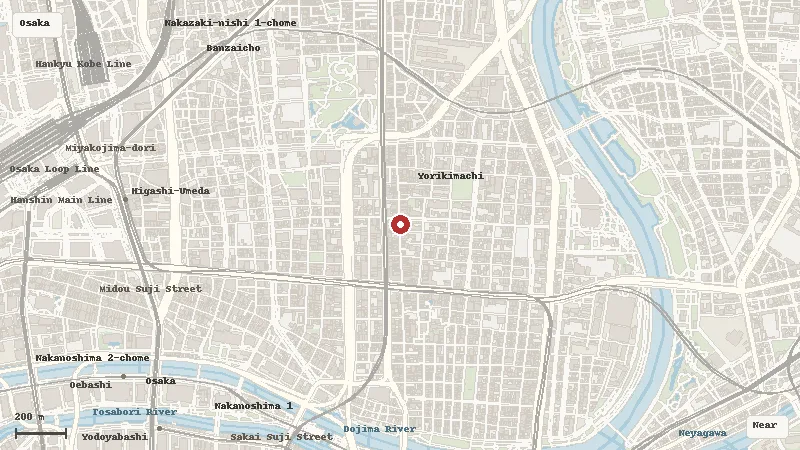
Map data © OpenStreetMap contributors