
Why go
The site offers an accessible introduction to architectural forms and craft traditions that can be harder to recognize when encountered piecemeal elsewhere on the island. As a curated cultural attraction, its value lies in interpretation and demonstration rather than untouched preservation.
Field Notes
Ishigaki Yaima Village is an open-air cultural park on a hill above Nagura Bay that uses historic houses, performance and landscape to interpret life in the Yaeyama Islands. Several of the traditional residences on the site were relocated rather than newly invented as generic “old Okinawa” scenery. Cultural-property documentation identifies homes from the early twentieth century, including the Morita, Makishi, Kishaba and Ohama houses. Their red-tile roofs, timber construction, verandas and room arrangements provide a physical record of regional domestic architecture.
Those buildings developed in a climate very different from mainland Japan. Low forms, heavy roof tiles, sheltered compounds and construction details respond to typhoons, heat and heavy rain. Relocation inevitably separates a house from its original neighborhood, but it can also preserve structures that might otherwise disappear. By placing several examples together, the village allows visitors to compare differences in date, family use and layout instead of imagining that one “Okinawan house” represents every island and period.
The site also presents weaving, music, dance, craft and other elements of Yaeyama culture. These performances make more sense when seen alongside the houses because they are tied to a regional social world rather than floating as isolated stage entertainment. The collection therefore works best when visitors spend time looking at materials, room organization and compound design instead of moving only from show to show.
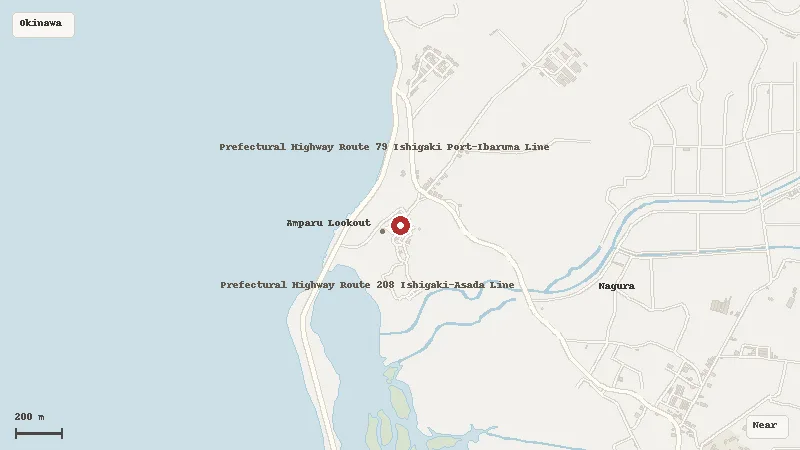
The natural setting adds another layer. Views extend toward Nagura Bay and the Nagura Amparu wetland, linking the cultural displays with a coastal environment of tidal flats, mangrove-associated ecology and subtropical vegetation. Yaeyama communities developed in close relationship with reefs, fields and seasonal weather, and the landscape remains visible from the park.
The village is a managed attraction with admission and operating hours, unlike a living residential lane such as Bise. Visitors should use the current schedule and allow enough time to compare several buildings. Its strongest value lies in architecture: preserved and relocated houses provide durable evidence of how people adapted domestic life to the southern Ryukyu environment, while performances and craft demonstrations add context around that built framework.
The village publishes its own admission and operating hours, and severe weather such as typhoons can alter access despite the site normally operating through the year.
Planning Notes
Suggested time on site: About 60 minutes for exhibits and mangroves; allow extra for shows, experiences or crowds. Keep travel and waiting time separate from that estimate.
Access reference: Motonaura bus stop; about 1 minute on foot, or about 30 minutes by car from New Ishigaki Airport. Check the final walking or connecting leg when choosing your route.
The operator estimates about one hour for the village's outdoor exhibits and mangrove walk, depending on crowds and what you see. Folk performances at Makishi House start at 10:00, 12:00, 14:00 and 15:30 and last about 20 minutes; weather or other circumstances may cancel them. Allow extra time for optional experiences and food. The show duration is separate from the village visit.
Location
Map data © OpenStreetMap contributors