
Why go
The climb is part of the experience: the steep approach separates the temple from the city below before opening to broad bay views. The sacred wells and elevated precinct give Kimiidera a distinct identity beyond simply being another urban temple stop.
Field Notes
Kimiidera is best approached as both a place of Kannon worship and a hillside viewpoint over Wakayama. The temple is the second stop on the Saigoku thirty-three-temple pilgrimage, so its identity extends beyond the local sightseeing circuit. Its official history also places it within the Japan Heritage stories of Wakanoura and the Saigoku pilgrimage. This combination is useful when exploring the precinct: the landscape, the devotional route and the buildings contribute different reasons for people to come here, and none requires rushing straight to the view.
The traditional approach involves 231 steps up toward the main hall. JNTO highlights the outlook over Wakanoura Bay and the early-flowering cherry trees, which make the ascent especially associated with spring. The red buildings, surrounding greenery and flowering trees create strong contrasts, but the outlook has attracted writers and artists beyond blossom season. Kimiidera Station on the Kisei Line provides a rail approach on foot. Allow separate time for the walk from the station and for moving around the hillside once inside the temple grounds.
Religious images are another reason to slow down. JNTO identifies Important Cultural Property Buddhist sculptures in the main hall and a large, multi-armed wooden Kannon completed in 2008. These belong to different moments in the temple's life, so a newer image can be appreciated alongside older objects without treating everything in the precinct as the same age. The temple's own history describes patronage from the Kishu Tokugawa lords and its later independence in 1951 as the head temple of the Guze Kannon tradition.
The temple publishes separate arrangements for its cable car and buildings, giving visitors another way to think about the ascent. Choose between a stair-focused approach and mechanical assistance according to your needs, then check the current access information before traveling. A temple walk can include worship, architecture and the bay outlook without needing to coincide with a particular event. If coming chiefly for cherry blossom, follow the season's actual progress rather than assuming that the temple's reputation for early bloom guarantees flowers on a chosen day.
Folklore & legends
The temple traces its foundation to the Tang monk Iko in 770. In its account, a mysterious light drew him up Mount Nagusa, where a vision of Kannon led him to carve an eleven-faced image and establish a hall. This is the temple's foundation tradition, offering a devotional explanation for the choice of hillside.
Planning Notes
Suggested time on site: 45–90 minutes. Keep travel and waiting time separate from that estimate.
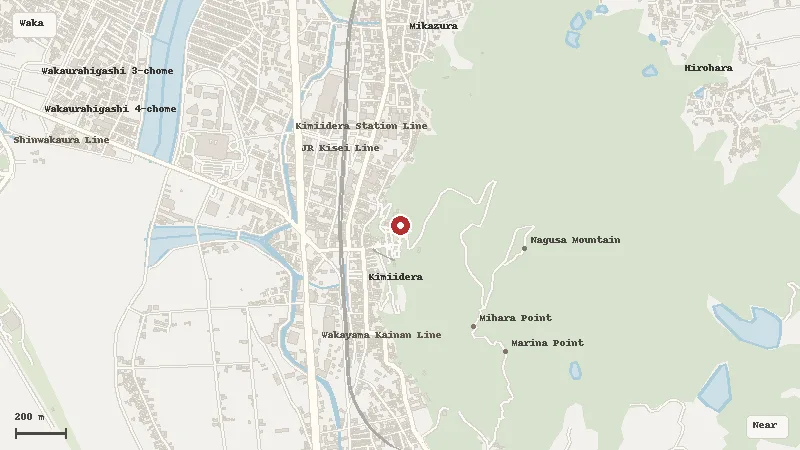
Access reference: JR Kimiidera Station; about 10 minutes on foot. Check the final walking or connecting leg when choosing your route.
Hours checked October 4, 2026 UTC for October 3–December 27, 2026 Japan-time visits. The Saikoku 33 Temple Association lists temple visiting as 08:00–17:00, separately from cable operation 08:30–16:30. The temple gives goshuin reception 08:00–17:00 and third-floor observation corridor hours 08:30–16:30. Daikomyoden Buddhist-image viewing is 10:30–15:30, pausing 12:00–12:30; special events may suspend this display. These component cutoffs and the midday pause do not close the entire temple. Prayer services may pause for annual ceremonies. The cable has a three-day annual inspection around February, outside this visiting period. No separate last-entry cutoff is published. Check temple notices before a late visit or a component-focused visit.
For optional prayer or memorial services, the temple publishes sessions at 09:00, 10:00, 11:00, 14:00 and 15:00, with registration completed 15 minutes before the chosen session. Ceremonies or priest availability can cancel a session; phone after 08:00 on the intended day to confirm. These sessions do not define ordinary temple visiting hours.
Location
Map data © OpenStreetMap contributors