
Why go
Allow time to compare the formal garden with the botanical sections instead of treating the grounds as a single flower bed. Consult the park's flowering reports if roses or another display are your priority. Children's activities and special events follow their own operating arrangements, so check the facility information before promising a particular experience to your group.
Field Notes
Look around the main gate and the western and southern sides of the fountain garden for remnants of the Muko Imperial Villa. The gate leaves are newer, but the gateposts and distinctive polygonal stonework survive. Along the former carriage road, edging stones, low stonework and a line of junipers preserve part of the earlier approach. These smaller details provide a closer link with the villa than the broad modern flower displays alone.
The park also identifies surviving decorative rockwork and the Shiomidai viewing terrace, whose heavy joints and wall-like design evoke a Western fortification. The umbrella-shaped arbor tells a different conservation story: its roof burned during the air raids, leaving bronze posts modeled as tree trunks. A new roof was restored in 2011 with community support. Comparing surviving material with restored elements turns the walk into an exercise in reading layers, alongside the roses, fountains and botanical collections.
Planning Notes
Suggested time on site: 2–3 hours. Keep travel and waiting time separate from that estimate.
Timing noted for this stop: Morning; rose season, spring blossoms, or autumn.
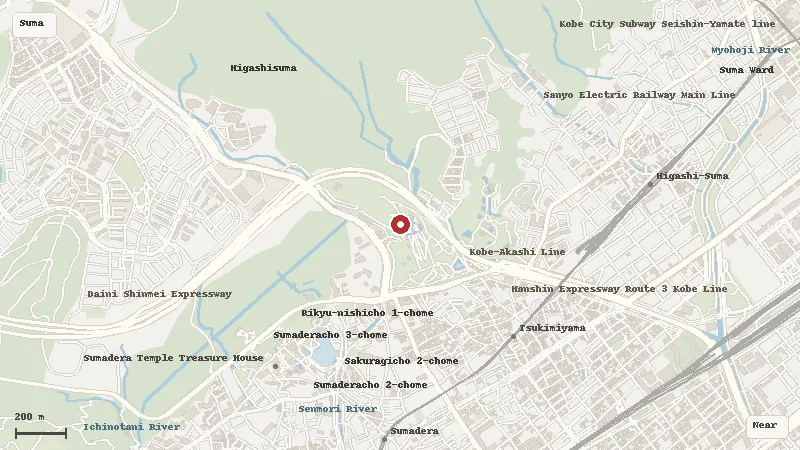
Access reference: Tsukimiyama Station or Suma Station; bus access reduces the uphill walk. Check the final walking or connecting leg when choosing your route.
Location
Map data © OpenStreetMap contributors