
Why go
The abbey adds a distinctive Christian chapter to Hakodate's religious landscape. Its continuing monastic role matters as much as its architecture, so the visit is best approached as a respectful look at an active contemplative community rather than a conventional museum.
Field Notes
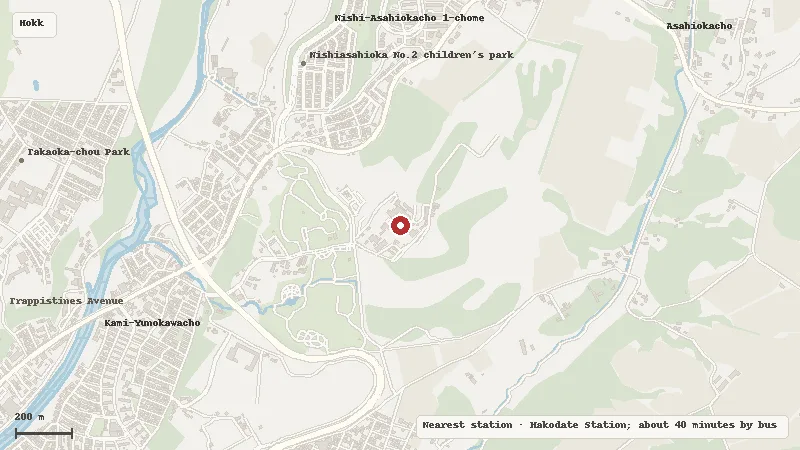
Our Lady of the Angels Trappistine Abbey brings a different strand of Hakodate's history into view on the hillside at Kamiyunokawa. Established in 1898 as Japan's first contemplative convent for women, it initially used a former orphanage building. The community's architecture subsequently changed through disaster and rebuilding: a severe storm destroyed the wooden convent in 1903, and a fire damaged the later complex in 1925. The buildings reconstructed in 1927 form the familiar historic setting today. Knowing that sequence gives the brick facade a history of persistence, rather than simply the appearance of an imported European style.
The red walls and semicircular arched windows are characteristic details to notice from the visitor area. Hokkaido's tourism guide describes the chapel's design as combining Gothic and Romanesque influences, while the front garden provides the principal outdoor space open to ordinary visitors. The religious buildings remain part of a private convent. A worthwhile visit therefore centres on looking carefully from the permitted areas, rather than expecting unrestricted access through the complex. The garden, exterior architecture and seasonal greenery can be appreciated together without treating the working monastery as an open-house museum.
The foundation began with eight sisters sent from France, and the community belongs to the Cistercian Order of the Strict Observance. A Hakodate guide prepared from material supplied by the convent explains a life organised around shared prayer, sacred reading and work. It also describes the importance of supporting the community through its own labour, including food production and handicrafts. This background changes the meaning of the quiet setting: it is connected with a deliberate daily practice. The enclosure is an essential part of that religious life, so respecting its boundaries is part of understanding the place.
The museum space beside the shop offers a way to learn about the convent's history and the sisters' lives within those boundaries. Madalena cakes, made by the community, connect the visitor-facing shop with its tradition of work. Consider the museum and a short garden circuit as the core of the visit, leaving time to read before making a purchase. For most visitors, the lasting interest is the relationship between a historic building, a contemplative community and the carefully limited way it welcomes the outside world.
Planning Notes
Suggested time on site: 45–90 minutes. Keep travel and waiting time separate from that estimate.
Access reference: Hakodate Station; about 40 minutes by bus. Check the final walking or connecting leg when choosing your route.
The city’s current detailed spot listing gives gate/shop/museum hours of 08:30–16:30 in March–April and October–November, 08:30–17:00 in May–September, and 09:00–16:00 in December–February, with December 29–January 2 closure. Its older access article instead starts the holiday closure on December 30 and gives different hours; use the detailed listing and confirm directly before travel. Ordinary access is to the front garden and shop-adjacent museum, not the private convent interior. Existing numerical rows are retained and no extension is inferred.
Location
Map data © OpenStreetMap contributors