
Why go
The site connects Japanese whisky history with an operating production environment rather than presenting the story only through display cases. Historic stone buildings and the continued use of direct coal firing make Taketsuru’s original Yoichi project physically legible.
Field Notes
Nikka’s Yoichi Distillery is the company’s first whisky-production site and remains an operating distillery as well as a heritage destination. Masataka Taketsuru founded it in 1934 after studying whisky making in Scotland and looking for Hokkaido conditions he considered suitable for the style he wanted to produce. The site near the Sea of Japan and the Yoichi River became the base from which Nikka developed before the later establishment of the separate Miyagikyo distillery. Visiting Yoichi therefore means seeing the company’s origin site rather than a generic Nikka museum.
The production method most strongly associated with Yoichi is direct coal-fire distillation. Pot stills are heated by coal, requiring workers to regulate the fire beneath them. The route also explains mashing, fermentation, double distillation and the movement of spirit into casks. That equipment provides useful context for how Yoichi differs from Nikka’s later distilling operations elsewhere. The industrial process is still active, so production conditions and tour access can vary.
Several historic buildings add another layer. Taketsuru’s former office dates to 1934, and the grounds include early laboratory and warehouse structures as well as the former home associated with Masataka and Rita Taketsuru, which was moved within the site. Nikka identifies a number of buildings as Important Cultural Properties. The Nikka Museum presents company history and Taketsuru’s life, while the shop and restaurant provide a separate visitor experience from the guided production route.
Those distinctions are important when planning. The complimentary guided distillery tour requires advance reservation and currently operates in Japanese. Visitors without a tour reservation use the shop-side entrance for the museum, shop and restaurant rather than entering the production route. Casual museum/shop access has its own last-entry time, and published annual closure dates should be checked before travel. Alcohol tasting is optional and separate from the historical value of the visit; anyone driving should follow the operator’s restrictions. Yoichi works best when the reservation status, entrance and desired components are decided before arrival, avoiding the common mistake of assuming that a museum visit automatically includes the production tour.
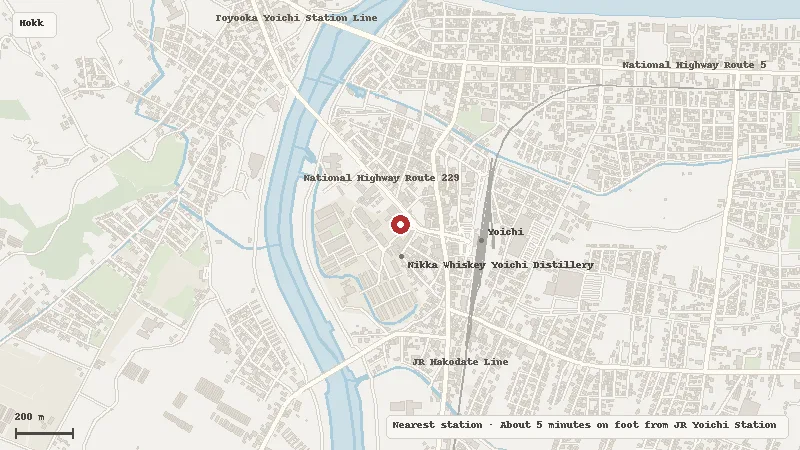
Yoichi Station is only a short walk away, making rail a practical option for visitors who want to avoid any conflict between alcohol-related activities and driving.
Planning Notes
Suggested time on site: 60–120 minutes. Keep travel and waiting time separate from that estimate.
Access reference: About 5 minutes on foot from JR Yoichi Station. Check the final walking or connecting leg when choosing your route.
Hours checked October 4, 2026 UTC for October 3-December 27, 2026 Japan-time visits. The operator's annual distillery closure is December 23-January 7, covering December 23-27 in this period; June 11 is also an annual closure. Casual museum/shop visits use the Shop Side Entrance. The Nikka Museum and Distillery Shop publish 09:15-16:15 hours, with last casual admission at 15:30. Guided production tours require advance reservations and use the Main Gate. Earlier catalog guidance listed tour slots from 09:30 through 14:30; that span was not reverified in this check and is not a common distillery opening interval. Follow your confirmed reservation time. All facilities close by 16:15, but the public guidance does not establish one common whole-distillery opening time. Museum/shop hours do not grant access to production areas. Check official notices and the details of your chosen visit before travel.
Use the linked Yoichi page to reserve the guided production tour. It requires JavaScript; check available tour times there before travel. Casual museum and shop access follows the separate arrangements above.
Location
Map data © OpenStreetMap contributors