
Why go
The racing format is unlike conventional flat racing: strength, pacing and the ability to negotiate two sand obstacles matter as much as speed. It preserves a distinctive Hokkaido horse tradition in a form that can still be watched at an active racecourse.
Field Notes
Banei Tokachi at Obihiro Racecourse preserves a form of draft-horse competition that survives nowhere else in modern professional racing. Huge horses pull weighted iron sleds along a straight two-hundred-metre sand course divided into lanes. Two artificial hills interrupt the route, so the contest depends on strength, endurance and the driver’s judgment about when to push forward or pause. A horse stopping briefly is not necessarily losing; conserving energy before the steeper obstacle can be part of a successful strategy.
The sport grew from Hokkaido’s working-horse culture during settlement and agricultural expansion. Official history traces the roots of banei to around 1900, when communities compared the power and value of horses used for farming and transport. Early contests included horse-to-horse pulling and other festival competitions before evolving into races in which animals hauled increasingly heavy sleds. The modern sport therefore descends from labor rather than from conventional flat racing.
That origin explains both the breeds and the pace. Banei horses descend from heavy European draft stock introduced and bred for Hokkaido conditions. They can weigh around a metric ton, while sled loads at the highest assignments can also approach a ton. The finish is recorded only when the rear of the sled crosses the line, emphasizing that the whole load must complete the course.
Organized banei racing once operated in several Hokkaido cities, but financial pressure eventually reduced the circuit until Obihiro became the sole surviving venue. That survival transformed the racecourse into a repository of regional working-horse culture as well as a contemporary racing venue. The course includes winter adaptations, and official information notes heating measures used to keep sections usable in cold conditions.
For visitors, the historical and spectator experience can be separated from wagering. Paddock areas, stands and interpretive material allow the horses and the mechanics of the sport to be observed without making betting the focus. Race days follow a published calendar rather than daily operation, so the intended date should be checked before travel. Banei is most meaningful when seen as the modern competitive descendant of Hokkaido’s agricultural draft-horse tradition, with the racecourse preserving a form of labor history that has disappeared from most other professional sporting contexts.
Planning Notes
Suggested time on site: 60–120 minutes. Keep travel and waiting time separate from that estimate.
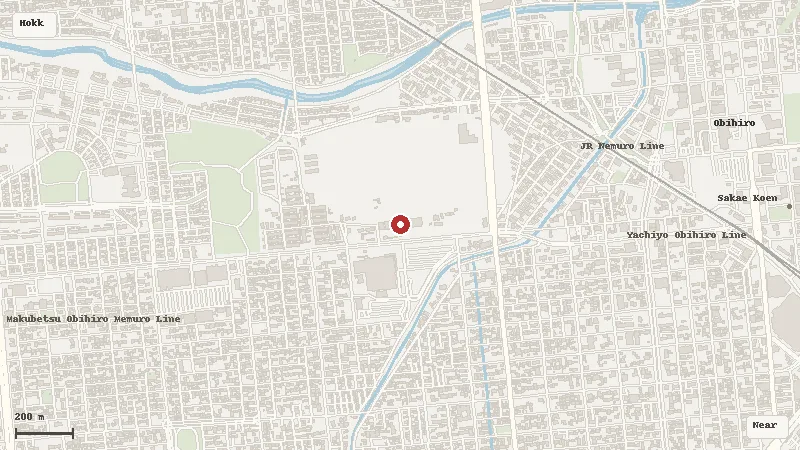
Access reference: Obihiro Station; bus to Obihiro Keibajo-mae or taxi about 7 minutes. Check the final walking or connecting leg when choosing your route.
The public animal-contact area operates from racecourse gate opening until 17:00 and closes Tuesdays. Racecourse gate times vary by date and may precede racing by hours; check the day’s schedule. The current access page lists racecourse admission as free. Animal-area hours do not define the whole racecourse schedule.
Location
Map data © OpenStreetMap contributors