
Why go
The complex makes comparison easy without pretending to represent every ramen shop in Asahikawa. Each counter remains an independent business, so a single stop can show how local ramen identity is expressed through several menus and shop styles side by side.
Field Notes
Asahikawa Ramen Village opened in 1996 inside the Powers shopping complex as a way to present several independent versions of the city’s ramen tradition in one place. The village did not invent Asahikawa ramen. Instead, it created a shared destination where established local shops could serve their own interpretations side by side. That makes the complex useful for comparison: the restaurants remain separate businesses rather than one kitchen producing a standardized regional recipe.
Asahikawa’s ramen history reaches back to the early Shōwa period and expanded strongly after the war. Local tourism interpretation describes a familiar style built around soy-seasoned broth that can combine pork-bone richness with seafood flavors, paired with relatively low-moisture curly noodles. Oil at the surface helps retain heat in Asahikawa’s cold climate. Those features are a regional pattern rather than a rigid rule, and each restaurant adjusts broth, noodles, toppings and sliced pork differently.
The value of the village is therefore not only convenience. Choosing among shops becomes a way to compare how one local food tradition has been interpreted by different cooks. Opening days and hours vary by restaurant even when the overall facility is open, so a traveler interested in one specific shop should check that shop rather than relying only on the complex’s general hours. A single meal can fit comfortably into a short visit; sampling more than one bowl requires more time and appetite than the compact site might suggest.
The complex also uses playful visual references to connect ramen with the city. A mural created by students from Hokkaido Tokai University’s Asahikawa campus combines local scenery, zoo animals and the Daisetsu mountains with a river imagined as ramen. The Ramen Village Shrine, added in 2006, uses noodle-related wordplay around relationships and the continuing prosperity of ramen culture. It is a modern, light-hearted feature of the commercial complex rather than an old religious sanctuary. For planning, treat the village as an active restaurant cluster: arrive during meal hours, expect individual shop schedules to differ, and use the official site if a particular restaurant is essential to the visit.
Minami-Nagayama Station is the nearest rail reference for walkers, while central Asahikawa visitors may prefer other transport depending on timetable and weather.
Planning Notes
Suggested time on site: 45–90 minutes for one meal and browsing; longer if sampling multiple shops. Keep travel and waiting time separate from that estimate.
Access reference: JR Minami-Nagayama Station, approximately 450 m / 5–7 minutes on foot; taxi or bus from central Asahikawa may be more convenient depending on timetable. Check the final walking or connecting leg when choosing your route.
Hours checked October 4, 2026 UTC: ordinary common-facility hours are 11:00–20:00 with no regular closing day, applied only to October 3–December 27, 2026 as a published schedule. Seasonal changes remain possible, and individual shops may shorten hours or close separately; check the chosen shop before visiting. This is not confirmation of actual operation on any date.
Location
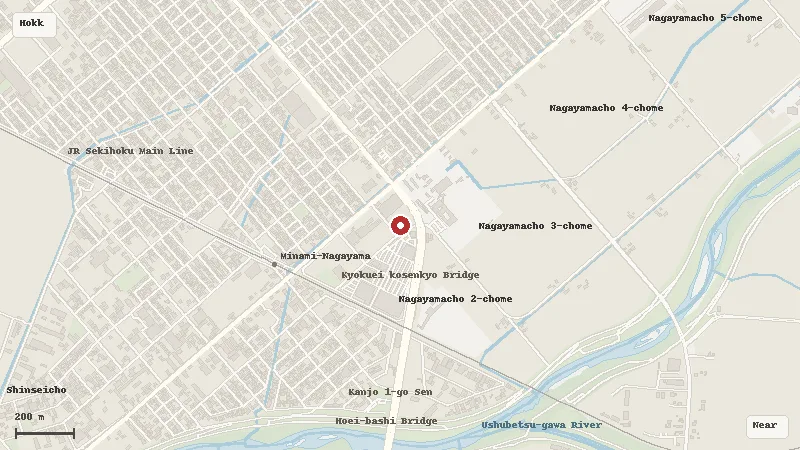
Map data © OpenStreetMap contributors