
Why we recommend it
Build the airport into the Hokkaidō itinerary: rail timing, winter disruption margin and terminal-service hours matter, while the onsen and other facilities can make an early or late connection easier.
Special Visit Instructions
Some places are easy to walk into. These are not. Follow the ticket, arrival, entry and venue-specific steps below before relying on this stop in a fixed itinerary.
Use JR from B1F
JR New Chitose Airport Station is located on B1F of the terminal building. The airport lists the direct trip to Sapporo at about 30 minutes.
Keep disruption margin
Hokkaidō winter conditions can affect surface travel. Protect the onward rail or road connection with additional margin rather than using the minimum scheduled transfer.
Use baggage services by terminal area
The airport lists lockers, baggage storage, delivery, porter and wrapping services across the domestic and international areas and connecting corridor. Check staffed-counter hours before relying on them.
Consider the 4F airport onsen
New Chitose Airport Onsen is on the Domestic Terminal 4F and currently operates for 23 hours a day. It has separate admission conditions and facility rules.
Check whether New Chitose offers pickup or shipping for your terminal
Yamato lists Domestic Terminal pickup and shipping on 1F, plus a Domestic Terminal shipping counter on 2F. For the International Terminal, the current list shows shipping on 3F but does not list international pickup.
About this place
Aviation at Chitose predates New Chitose Airport itself: the airport’s official history traces the local landing field to 1926, when villagers helped complete a landing site and the first aircraft arrived that October. A passenger terminal building opened at Chitose Airport in April 1963, establishing the area as a major northern gateway during the growth of Japanese civil aviation. New Chitose Airport officially opened on July 20, 1988, and its current passenger-terminal development accelerated with the opening of the New Chitose Airport Terminal Building in July 1992. Further domestic/international terminal and connecting-facility work was completed in 2011, followed by an international-terminal extension in 2019.
The airport’s official overview lists two 3,000-metre runways and 24-hour airfield operating hours. That 24-hour aviation status should not be confused with a promise that every passenger-terminal service or surface connection is available around the clock. For most travelers heading toward Sapporo, the most important ground link is JR New Chitose Airport Station on B1F of the terminal building. The airport currently describes the direct JR trip to Sapporo at about 30 minutes, making rail the default structured transfer for many city itineraries.
New Chitose also has unusually extensive baggage infrastructure for travelers who need to separate airport time from sightseeing or hotel check-in. The airport lists coin lockers as well as baggage storage, delivery, porter and wrapping services across the domestic and international terminal areas and the connecting corridor. Those services can help with a long connection or a final-day Sapporo stop, but the staffed counters have their own opening hours even when the airport itself remains operational. Travelers should therefore check the exact terminal and counter rather than assuming every baggage service is available at any hour.
A distinctive landside amenity is New Chitose Airport Onsen on the Domestic Terminal’s fourth floor. The facility currently operates for 23 hours a day and includes bathing and rest areas, providing a practical option during a long airport wait. It has separate admission conditions and operating details, so it should be treated as an airport facility with its own rules rather than as unrestricted terminal space. The onsen is particularly useful context for an early departure or late connection, but it does not replace the need to check airline, security and ground-transport schedules.
For Hokkaidō travel, seasonal conditions add another layer to airport planning. Rail gives a direct route toward Sapporo and onward connections, but a winter itinerary should preserve margin for weather or transport disruption rather than relying on a minimum published transfer. The airport’s combination of terminal rail, baggage handling and long-wait facilities makes it valuable as a full transport guide, not merely a reference airport record. The practical sequence is to confirm the terminal and surface connection first, then use the airport’s extensive facilities only after the onward timetable is secure.
Planning notes
JR New Chitose Airport Station is on B1F of the terminal building, and the airport lists a direct Sapporo trip of about 30 minutes on the relevant JR service. Baggage storage, delivery and lockers are available across the domestic, international and connecting areas, which can simplify a city stop or a long layover. New Chitose Airport Onsen is on the Domestic Terminal’s 4th floor and operates for 23 hours a day, but it has its own admission rules and service schedule. The airport’s airfield operates 24 hours; do not assume every passenger-terminal facility or train does the same. In winter, leave extra margin for weather-related surface-transport changes.
Yamato lists Domestic Terminal pickup and shipping on 1F, plus a Domestic Terminal shipping counter on 2F. For the International Terminal, the current list shows shipping on 3F but does not list international pickup.
Location
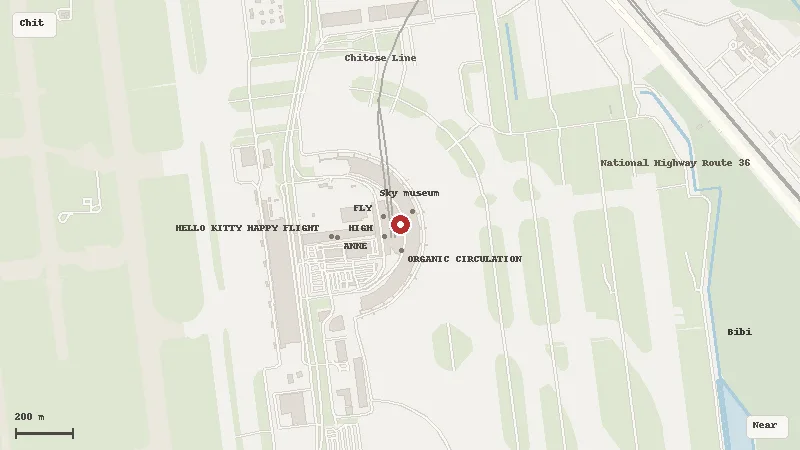
Map data © OpenStreetMap contributors